|
Disclaimer: This website or these products are not intended to diagnose or prescribe for medical, chiropractic or psychological conditions, nor to claim to prevent, treat, mitigate, or cure such conditions. They are not intended to recommend specific information, products, or services as treatment of disease or to provide diagnosis, care, treatment, or rehabilitation of individuals, or apply medical, mental health, or human development principles, to provide diagnosing, treating, operating, or prescribing for any human disease, pain, injury, deformity, or physical condition. Potential benefits are recommended based upon traditional uses and may not be generally recognized as substantiated by competent and reliable scientific evidence. Any use of the techniques, education, information, herbal salves, and other products or services is based upon customer informed consent and private license. Results may vary depending upon use and commitment. |
 <  > 
Chapter 4:
Embarrassment of Riches

How I Learned that Suppression is the
Medical Profession's Most Enduring Legacy: A Quick Review of the Astonishing Number of Alternative Cancer Approaches; the Conflict This Poses to Our Common Narrative; and How it Contributes to Understanding the Defects in our Cultural Operating System. Special Comparative Case Study: A Short History of Scurvy And the Suppression of Hypoascorbemia
 hat I found most intriguing
during the time I developed Alpha Omega Labs and researched
alternative cancer approaches was their
abundance and how efficient the
forces of the medical establishment and their allies had
been at suppressing discussion of them.My initial
exposure to this subject
came through escharotics. However, it is not
simple chronological integrity that caused me to
devote these first three chapters to it.Escharotics
may have been the "path" by which I sought and found
"enlightenment," but -- if you will allow me to extend
the metaphor -- once having arrived I soon learned that
there are many other legitimate paths to "enlightenment."
And yet, as most Indian Gurus of note are likely to tell
you, these paths may be in abundance . . . but they
are largely ignored.Before we get into
the mechanics of "how they got away with it" --
and continue to do so, it is important to cover the most
outstanding approaches and the relevant evidence. Because
the readers of this work will include a broad spectrum:
from novices of alternative health care to those rare
practitioners who are already familiar to much of this
material, I have tried to strike a compromise. There is
plenty of bibliographical support below, however, I stick
primarily to those approaches to which I have been an
eyewitness.With this introduction
in hand, the purpose of this chapter thus turns on
three objectives:
A Quick Word Before We Begin About
Orthodox Medicine & 'Managed Maladaptation' Before I expand
the discussion of suppressed cancer remedies, I want to
preface any further investigation by stating that in the
thirteen years I operated Alpha Omega Labs, I was in
contact -- in person, by email, or by phone, with
literally thousands of cancer patients and their
primary health care providers. Over this time, I came to
believe that no treatment of any kind was a substitute
for examining the underlying 'maladaptation' that was at
the root of the problem.Nearly all disease,
but particularly cancer, has as its primary cause some
condition to which the body, mind, or spirit has been
subjected, which is in deviation from its natural state.
[ 5b ]
Perfect health
is man's natural state. Not disease. The body contains
an unfathomably complex system of countermeasures to
maintain its natural state (or "homeostatis") and is
able to adapt to a wide variety of conditions. Those
'unnatural conditions' which take it outside the range
of adaptable measures through which it can change
and still maintain health -- be they spiritual, emotional, or
grossly physical (i.e. bad diet, exposure to toxic chemicals
or harmful EM emissions, etc.) -- are always examined
first by a competent health care practitioner before
the issue of 'treatment' is ever addressed.If you have a flat
tire, logic would dictate that you remove the nail before
you attempt to patch the puncture. Orthodox medicine, as
we will examine in more detail in coming chapters, is
built upon an enormous edifice that dictates that
since there is more money to be made by applying the
patch (i.e. treatment) and keeping the nail in the tire
(i.e. ignoring the maladaptive cause(s) . . . after all -- how
can you have repeat business if the nail is removed?),
the notion of timely 'nail-removal' is pure quackery.
This position is part of a larger set of functions
within Orthodox Medicine that I call "Managed Maladaptation,"
which I will get to later.
(Among
the thousands of ready examples is the determination
with which Orthodox Medicine has fought throughout most
of its existence to teach that proper diet has nothing
whatsoever to do with disease. More than one honest
physician in the U.S. has told me in private, "We don't
have 'health care' in this country. We have 'disease care.'
It makes more money.")This having been
established, it is important to note that the examples
below should not be considered in isolation of this
understanding. Rather, the treatment approaches below
are presented because they all follow a similar pattern,
the same pattern that was presented to you when Cansema
was discussed in Chapter 1. You will recognize most
of the points below because most of them were included in the
"Ten Conditions"
when this Suppression Pattern was first introduced.
Specifically, each treatment we will talk about
carries the following characteristics:
Internal Use of Escharotics
 During the
very brief life of Lifeline Sciences,
I first heard reports of the internal, 'off-label' use of
our zinc-chloride based escharotic preparation, which
was designed for topical use only.
[6] [7]  Such reports
came from end users and also from practitioners.
It was out of one such report that we developed a
suppository
operation to make a suppository version of Cansema.
(This was closed down shortly before the FDA raid in 2003).Internal versions
followed in
capsule
and tonic form.Anecdotal
accounts concerning Cansema are
accessible from its product
page.
Escharotics of an Earlier Generation:
The Harry Hoxsey Story  Had I been more familiar with
the work of Harry Hoxsey when I first started making escharotic
preparations in 1990, I would not have been surprised with my
introduction to reports of internal use.In time,
Alpha Omega Labs
would strive to educate its customers about
Hoxsey's earlier work -- natural remedies,
both escharotic and non-escharotic -- by encouraging
them to read his original book,
You Don't
Have To Die,
purchase Kenny Ausubel's book (see right) and
providing
a free viewing of Ausubel's movie. We later added an
internal version
that was made by a manufacturer in Canada, and provided
articles concerning its history.A
clinic
in Mexico today carries on Hoxsey's work.
[ 8 ]Similarly, probably
because of the astonishing parallels between the
methods used to suppress them, I was asked about
Essiac.At Alpha Omega Labs, we never
manufactured this product, and assumed that this
herbal formula, promulgated to the world through
a Canadian nurse, Rene Caisse, was proprietary.
[ 9 ].
As it turned out, another Canadian manufacturer made
the product and we
carried
it on our website as well. Though I was
never able to obtain convincing clinical research
on this product, it has had many adherents over the years.Stories about
the suppression of herbal formulations
exist in such abundance that my exploration got
to the point where I was no longer surprised
to hear it. When I discovered the series of events that led
to the closure of
at the National Cancer Institute -- a weakly funded
operation that was uncovering hundreds of promising
plant-derived "medicines,"
. At the same
time I documented a suppressed, Ecuadorean herbal
compound, named
that was railroaded by the same Washington bureaucrats.
The same pattern of suppression was documented in the
manner in which the pharmaceutical industry attempted
to
quash news about graviola
(Annona muricata). 
Those Deadly Apricot Seeds:
When Suppression by "The Authorities" Reaches Breathtakingly Obscene Proportions Let me confess
from the outset that, based on my work with
cancer patients, I did not myself find enough
evidence to become convinced that apricot seeds,
or the isolated nutrient from them, Vitamin B17,
were as effective as most of the escharotic
preparations that I worked with. I say this,
even though Alpha Omega Labs
sold
its own packaged apricot seeds. But they
have many adherents, including a close personal
friend, Jason Vale, founder of Christian Brothers
(now
serving a 63 month sentence in the U.S. for
selling apricot seeds).
 By the time that
I decided to add
apricot
seeds to the Alpha Omega web site in 2002, Jason Vale was
already in the crosshairs of the U.S. Food &
Drug Administration. Therefore, the "copy" I
used in presenting the seeds was decidedly restrained.
My approach was to make G. Edward Griffin's
video available,
along with a recommendation to read his book,
World Without Cancer.
This would allow people to make up their own minds.An honest government
that worked as serving the interests of its citizens
and not a wealthy, medical elite, would do something
similarly: it would allow those who make such products
available to make known the documented evidence of its
"possible" benefit. It would not attempt to suppress
the "nutritional deficiency" argument made by
proponents of apricot seeds.But
the arguments that
support this approach will, no doubt, continue to be suppressed.Why?Because, as in
the case of all plant-based examples provided above,
such benefits nearly always fall into the target
zone of our originally stated
"suppression pattern."
The Astonishing Suppression of Electromedicine
Horowitz ascribes "electro-suppression"
as occurring for a little over a century. But the record is clear
that it has been going on for much longer than that.
Paracelsus' healing techniques were closely tied to subtle
electromagnetic influences and their properties, though not
identified as such in his time. [ 11 ]
Franz Mesmer's remarkable electromedicine devices and their
capabilities, dating to the 1700's, have been so well suppressed
that most people associate his name exclusively with hypnotism
(as in the English, "mesmerize") [ 12 ],
and the medical applications of the work of
Karl Von Reichenbach [ 13 ],
Antonio Meucci [ 14 ], and
Nikola Tesla [ 15 ], dating
primarily to the 1800's, have all been subjected to the
"suppression pattern."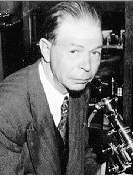 Nonetheless, the
name that is probably most synonymous with the suppression of
electromedicine
in our time is Royal Raymond Rife, about whom I wrote a
"quick primer"
for the Alpha Omega Labs site. Excellent treatises on the
pathetic treatment of Rife -- easily one of the
greatest scientists of the twentieth century -- at
the hands of the U.S. Government medical mafia
is covered extensively elsewhere
[ 16 ]. It mimics the suppression
of Wilhelm Reich's discoveries concerning orgone energy --
in time frame and criminal methodology.
I have seen the inner-workings of this facet of
the police state "up close and personal," so
I recognize all the signs. In the case of Reich,
his work that was considered so threatening to the medical
establishment that a U.S. Federal Judge ordered not
only Reich's books burned, but also other work that
merely mentioned orgone energy.
[ 17 ]
It is unfortunate,
though probably inevitable given the nature of our culture,
that Rife's name has been associated with an endless
stream of questionable electronic devices, whose only
connection to Rife is that he also powered his
apparatus with electricity. 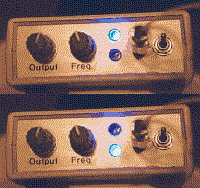 Such co-optation
has not been so effective in dealing with devices
that employ the simple schematics of
Robert C. Beck. (A good friend, medical researcher,
and fellow victim of the U.S. criminal justice system,
Michael David Forrest, wrote a small (69 page) book --
also free of charge --
for those wanting more information on this subject,
entitled, "The
Investigation of Electromedicine: An Inquiry into Effectiveness
of Electromedicine Devices Against Disease; The Best Electromedicine
Devices Explained & Reviewed.") Nor has heavy-handed
tactics prevented the results of the research
of Dr. Robert O. Becker or Dr. Daniel Kirsch from getting
into the hands of the public. [ 18 ]Quite a number of
people I have encountered over the last few years have
indicated to me that on the strength of the illegitimate
suppression of Beck technology alone, they have to
come to a realization of most of the aspects
of the suppression pattern
on their own. William Frederick Koch & Glyoxylide
Shortly after I got out
of U.S. Federal Prison in March, 2006, I came upon a man,
Mark Krissle, who indicated that he was working with a physician
in Mexico who had perfected the lost science behind
Dr. William F. Koch's "glyoxylide therapy,"
an approach that I had
assumed passed on when Dr. Koch himself did.
[ 19 ]The theoretical
foundation to Koch's work (not to be confused with
the
nineteenth century physician who developed
Koch's
postulates) is well-understood. What plagued
those who attempted to follow his work after he
died is the precise method of manufacturing
glyoxlide to Koch's original specifications.What I discovered
from researching Krissle's claims is that the methodology
has, indeed, been kept intact. It is, however, being
sequestered to keep those using and developing
it out of harm's way. The group who now has Koch's
technology are developing an impressive clinical record
of proof to back up their future claims.
They do not advertise or publicize in any way,
and their funds come from very private sources.
They will make their methods available to the public
when the "time is right."To the uninitiated,
all this talk about superior technology (in health care,
or any other field) being kept alive, out of the public
domain, by a secret group
of enthusiasts -- nay, I dare say "believers," may sound
spurious. To those not in the know, this smacks of
secret societies, unproven conspiracy theories and/or
paranoid psychosis. But to those who have the Truth
behind our culture's "common narrative" it is nothing
if not unoriginal and commonplace.This development,
more than anything else I have been associated with,
reminds me of Morris Berman's prescribed course
for protecting our culture's most prized technologies
from greedy, corporate powers who are determined
to destroy whatever interferes with their profit
agenda. More specifically, Berman talks about
the need for those who find ourselves "strangers"
in our own modern culture, where postmodernism
has brought to the table not merely the denial of
truth but also the denial of the IDEAL of truth
[ 20 ],
where one places his life in danger for
unwittingly promulgating effective disruptive
technologies that threaten establish profit models,
to assist in maintaining an underground of
useful technologies which will surface at the
appropriate time, such as the monks of the
4th century did at the dawning of the Christian
era to prevent the most valuable portions of
Greco-Roman culture from dying forever.Berman calls
this course the "monastic option." [ 21 ]The monastic
option carries with it an understanding that
our culture is unsustainable -- that, like
similar resource-hungry, non-replenishing civilizations
before it, it has an end point. It carries
with it an understanding that history is not
linear. It's circular. What will survive through this
coming "ekpyrosis," or as William Catton would
put it, this "die-off," will, in part, be determined
by the various underground movements that sequester
and protect sustainable technologies away from the
present Elite. In 1898
the American essayist, John Jay Chapman wrote
that "business has destroyed the very knowledge in
us of all other natural forces except business"
(Practical Agitation). [ 22 ],
This tendency to
fashion all pre-approved facts through the
rubric of corporate profit; to marginalize,
ostracize, if not destroy all that doesn't conform
to the current global fascist agenda -- and my tone will
only surprise those who don't understand that
corporatism and fascism are synonyms -- is what
makes the monastic option a necessity.Before
I saw what had happened to Koch's work and what
was being done behind the scenes -- away from
the prying eyes of Western corporate spies
(particularly, U.S.; more specifically, U.S. Government;
more specifically still, U.S. Government acting on behalf of
its corporate overlords, in this case on behalf
of Orthdox Medicine) -- I had no
idea the extent to which this approach was being
put into practice . . . naturally, unwittingly,
and without regard to any name, label, system,
theoretical structure, or formal social movement. The CanCell Controversy
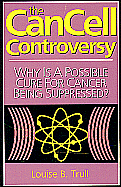 In 2002
Alpha Omega Labs got involved with
a company that was making what was reputed to
be the most advanced formulas to come out of
what I call "The Cancell Project," made
popular by Louise B. Trull's book. I created
a
web
page to announce the product, its history,
how it worked, etc.Although
I understand the theory behind Sheridan's formula,
I myself have no idea how to manufacture it --
as I do most of the other Alpha Omega Labs'
products. However, I add this item to our
present chapter because, once again, we are
talking about a nutritional supplement that has
a long history of use, where
the Government, acting on behalf of the
Medical Industry, has placed impediments to its
makers from discussing clinical results with
existing and prospective customers. Yet more evidence of "the suppression pattern." Stanislaw Burzynski & Antineoplastins
My wife (Cathryn E. Caton, N.D.) and I
dated throughout 1992 before getting married in June of the following
year. There was a period there, of less than a year, where
my wife maintained her apartment in Houston, while working
as a lab technician for the famous cancer doctor,
Dr. Stanislaw Burzynski. Cathryn never worked
AT the Burzynski Clinic, but rather the research and quality
control department, which was housed in a separate facility.Few phenomena within the
orthodox medical community are considered as distasteful or
even treacherous as a member from their own ranks
coming up with an approach to treating cancer
that differs from what is officially
sanctioned. It is, therefore, no surprise to anyone who
is familiar with Burzynski's case that the orthodox community
has labelled
him a quack with false credentials,
seen to it that the voluminous amount of data he has produced is written off
as controversial,
and prosecuted him criminally to
marginalize
his work in the mind of the public.I can relate to the tribulations
of Dr. Burzynski, in particular the Government's attempt to
give him life imprisonment
for a bogus charge of fraud (my own plea agreement had
a bogus charge of mail fraud).Despite the U.S. Government's
attempt to label him a charlatan, Dr. Burzynski has repeatedly encouraged
prospective patients, or even just interested parties, to
"do your own research".Again -- we see abundant
signs of our "suppression pattern."
On the next page, we
will address the second objective of this chapter. We will
take the experiences discussed to this point and tie them
together by analyzing the power of "common narrative,"
viewed through the prism of "whistleblowers" who have
seen the Truth behind the curtain.
Chapter 4, Section 2 ---- >>>
|
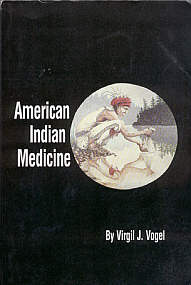 The opening quote for
this chapter is taken from Vogel's
American Indian
Medicine, and is part of the University of
Oklahoma Press's "The Civilization of American
Indian Series."One is struck by the
widespread co-opting of indigenous American knowledge of the healing
arts by established medicine -- including its inclusion of
large numbers of medicinal herbs in early Materia Medica,
only to discard this treasure trove of medicinal knowledge
once more profitable pharmaceuticals were developed.The documentation
that supports this historical phenomenon is voluminous
and undeniable today, but even at the Founding of the
American Republic, the reigning Elite dare not admit their
reliance on "Indian medicine" to treat their patients --
a fact that is rooted in the respect that early
Colonists had for the healing techniques of
the indigenous peoples. That physicians of that day
could not even be honest with themselves is
even made obvious by the writings of Dr. Benjamin
Rush (one of the signers of the Declaration of Independence),
who was moved to write, "We have no discoveries in the
materia medica to hope for from the Indians of North
America," because "it would be a reproach to our schools
of physic if modern physicians were not more successful
than the Indians even in the treatment of their own diseases."
(p. 63) Such concern was well-founded, since it was
the medical establishment that even well into the
eighteenth century was still treating patients
with mercury, blood-letting, and calomel -- later
to be replaced by today's preferred methods of
poisoning the patient : chemotherapy, pharmaceuticals,
and radiation therapy.Those who have taken
the time to study the historical record understanding
that modern medicine was largely the domain of
"barber-surgeons" before Indian influence (p. 112). Moreover,
modern pharmacology has been shown to be largely
a perversion of aboriginal phytopharmacology. 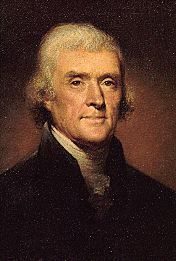 Thomas Jefferson's Criticism of Medicine More Valid Today -- And For The Same Reasons! Thomas
Jefferson warned about the dangers of
the medical establishment and his
criticisms are more valid today than when he
voiced them. Vogel points out that Jefferson
echoed a widely held sentiment in his day
when he wrote (to Dr. Caspar Wister, then
professor of anatomy and surgery at the
University of Pennsylvania) how he abhorred
the changes in medical doctrines, "alleging
that medical theories 'succeed one another
like the shifting figures of a magic lattern.
I believe we may safely affirm that the inexperienced
and presumptious band of medical tyros let loose
upon the world, destroys more of human life
in one year, than all the Robinhoods, Cartouches,
and Macheaths do in a century. It is in this
part of medicine that I wish to see reform,
an abandonment of hypothesis for sober facts,
the first degree of value set on clinical
observation, and the lowest on visionary
theories." (p. 114)Put more
simply, Jefferson was saying, "Let's forget
all this theoretical nonsense. Medicine should,
first and foremost, be about what works for
the patient!" To borrow a phrase from our
own time, Jefferson was an advocate in the
18th century of the very thing that modern
medicine fights hardest against in the
21st -- that is, clear and convincing evidence
of benefit to the patient over and above
the alternatives it attempts to suppress.(Jefferson's
sentiments have been echoed by many famous
American intellectuals. Oliver Wendell Homes
noted that the American medical mind "has clearly
tended to extravagance in remedies, as in everything
else." He despised its tendency towards
overmedication, adding that "nature heals
most diseases without help from the pharmaceutic(al)
art," calling medicine "a colossal system of
self-deception . . . ")
 Digressing
from Vogel's work for just a moment, for those
who might feel agitated by Jefferson's comment
or think that it doesn't bear validity on the
state of health care today, I offer my
next exhibit. This is an important reference
because it shows the degree to which Modern
Medicine is devoid of any commitment to
what is "evidence-based."The
cover of the May 29, 2006 issue of Business
Week announced a lead article, entitled
"Medical Guesswork: From heart surgery to
prostate care, the medical industry knows
little about which treatments really work." (p. 73-79)The article
itself was about the findings of David
Eddy (M.D.), a heart surgeon turned Ph.D. in
mathematics and health care economist.
"The problem is that we don't
know what we are doing,"
(Dr. Eddy) says. Even today, with a
high-tech health-care system that
costs the nation $2 trillion a year,
there is little or no evidence
that many widely used treatments
and procedures actually work better
than various cheaper alternatives.
 Dr. Eddy's
supporters from which the medical industry itself
claim that the portion of medicine that has
been proven effective is still "outrageously
low -- in the range of 20% to 25%."
Business Week quoted Dr. Stephen C. Schoenbaum,
executive vice-president of the Commonwealth
Fund and former president of Harvard Pilgrim
Health Care, Inc. as stating that
"We don't have the evidence [that treatments
work], and we are not investing very much in
getting the evidence."Although
the article emphasizes (again, quoting
Dr. Eddy) that "what's required
is a revolution called 'evidence-based medicine'),
it isn't capable of going the extra mile to point
out the obvious: it isn't possible
for Modern Medicine to become 'evidence-based.'
To preach this message to is demonstrate
a lack of understanding about what Modern
Medicine is: an organizational structure
devoted to protecting higher profit
therapies and treatments, while
suppressing more effective, lower
profit alternatives.Modern
medicine had, from its inception, this basic
'modus operandi' hard-wired into the
very fabric of its being. To move in the
direction of "evidence-based medicine"
would destroy the very means by which
Orthodox Medicine is able to fund its
competitive advantage. Dr. Eddy understands
what's wrong with medicine (to this extent),
but he fails to understand the economic
and political dynamic that is the cornerstone
of the industry he works in.To come
to this understanding, he would have to be
willing to step outside his industry's
"common narrative." He can't do that.
He's a respected physician. And respected
physicians -- again -- are loath to question
a system which is the very source of their
respectability.What really
makes the juxtaposition of Jefferson's remarks
and Eddy's findings worth investigating
is how far one can investigate what's wrong
with medicine, how far one can go to
articulate that they really do understand
the problem -- and all the while failing
to see that this defect is not fixable.
And why.Since
the early 1980's, Dr. David Eddy has been
using this term (evidence-based medicine),
and his is an extraordinary, professional
journey to come to many of the very same
conclusions I did without working inside
orthodox medicine.Eddy
comes from a family of four generations
of doctors. He went to medical school
in the 1970's; "picked cardiac surgery,"
he admits, "because it was . . . the glamour field."
He tells a story of asking questions as a young
story -- questions as to what evidence existed
that certain treatments really worked. This,
in turn, set him on a journey where he discovered
that most treatments were based on "rules and
traditions," and not on scientific evidence.Still not
content with these early findings, Eddy decided
to use advanced mathematics and statistics to
help make treatment decisions more reliable
and "help bring logic and rationality to
the medical system."
He went back to Stanford to get a Ph.D. in
a mathematically intense Ph.D. program in the
Engineering-Economics Systems Department."While
going for his Ph.D. in math, Eddy got a job
working at the legendary Xerox Corp.'s
Palo Alto Research Center, where he created
a program to model cancer screening.
His Ph.D. thesis in 1980 made front-page news.
The findings? That annual chest x-rays and
yearly Pap smears (for women) were a waste
of money. (Again, he misses the point.
They aren't a waste of money for the people who
matter : those in the medical field who administer
them.)Continuing
with our story of rational disconnect, Eddy
won the most prestigious award in the field
of operations research, the Frederick W. Lanchester
prize (causing the American Cancer Society to
slightly alter its guidelines). Later he
was appointed a full professor at Stanford,
followed by an appointment as chairman of the
Center for Health Policy Research & Education
at Duke University. Over the past 26 years
he has -- repeatedly, passionately, compellingly,
and over a broad range of ailments, shown
that medicine -- more times than not --
acts not in accordance with what is best for
the patient, but what is best for those who
provide treatment.But, again,
he cannot confront the obvious. He cannot breach
the very cornerstone of modern medicine: that
it is born of exploitation, of political and
economic assymetry between doctor and patient,
of monopolistic opportunism and captive markets,
of medical tax collector and victim. If Eddy's
advice were every embraced by orthodox medicine,
it would surely crash under the weight of its
own inherent inability to provide what is in
the best interest of the public's health.
Modern medicine is, therefore, non-reformable;
because the extinguishment of corrective
feedback loops is built into the very fabric of
its existence. It it were ever "evidence-based,"
it wouldn't be conventional medicine as we know it.
It would be an entity we would scarcely recognize.These are lines
that Dr. Eddy simply cannot cross.  "I endorse this therapy
even today for I have, in fact, cured my own cancer, the
original site of which was the lower bowel, through
Essiac alone." (p. 2)So wrote Dr. Charles
Brusch, M.D., the personal physician of U.S. President
John F. Kennedy -- but then he was only one of many
thousands of patients who claimed that Essiac
cured their cancer. This should strike few as surprising.
Its primary ingredients show a remarkable similarity
to Hoxsey's [in the case of Essiac, it is burdock
(Arctium lappa), sheep sorrel (Acetosella vulgaris),
turkey rhubarb (Rheum palmatum), and slippery
elm (Ulmus fulva), p. 45-54] in terms of its underlying
botanically-based nutrients.Nurse Caisse, the
Canadian nurse who took this old Ojibwa Indian formula and
made it popular, claimed a success rate of close to
80% -- the same figure used by Nurse Mildred Nelson,
who ran the "Hoxsey" clinic in Mexico for many years.If actual success
rates were even half this and a critical mass of
patients in the West were aware of its benefits over
the dismal rates of high-cost, conventional therapies,
it would cause the collapse of a huge sector within
the billion dollar "disease care" industry throughout
the First World.The governments
of this World who are married to these powerful interests
have so constructed political, economic, educational,
and mass communications within society to ensure that
this doesn't happen. So the medical "killing fields"
continue unabated. 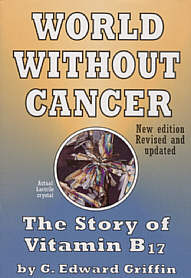 If there is
no evidence that cancer is (at least in part)
a nutritional deficiency disease, then why go
to so much trouble to suppress the findings?Does the
answer have anything to do with the fact that
if existing nutritional regimen were discovered
that be effective in the treatment of cancer,
and a critical mass of the citizenry were to
discover this, the economic collapse of an entire
trillion dollar health care system might ensue?Even
though laetrile and other forms of Vitamin B17
therapies don't work for a substantial number
of cancer patients, there is sufficient benefit
to a large enough number that patients should
be encouraged to example this option.If even
one patient in ten obtains relief, the Public
should be made aware of it. As it is,
Jason Vale documented a much higher percentage.The response
from the medical community and the mobsters who
do their bidding at the Food & Administration?Send him to prison! 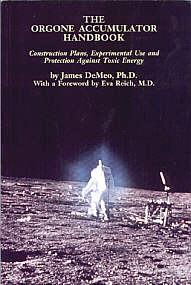 I discuss
Wilhelm Reich and orgone energy elsewhere in this book,
but I quote from James DeMeo's book in this chapter.
It is one of the few simple, easy-to-read
instruction manuals that show you how to
make your own orgone accumulator.I recommend
this book because it includes a quick, historical
summary of Reich's work and life, which ended in
Lewisburg Federal Penitentiary, where "he died
in 1957. His death is prison occurred two weeks
prior to his parole date, at a time when he was
happily anticipating his freedom, and a life
in Switzerland with is new wife." (p. 7).James T. Kimball
documents
torture and killings in the Federal penal system, and based
on what I saw in Beaumont myself, I have no doubt that
select inmates are targeted for extermination.Though nearly
50 years ago now, it is easy to see that since little
has changed, there is no reason to believe that a high
probability does not exist that Wilhelm Reich was
not subjected to the highest level of suppression.He was assassinated. 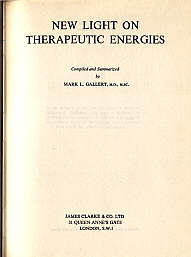 . . . and while we're on
the subject of suppressed electromedicine (Wilhelm Reich
gets coverage in this volume, too -- starting on page 57;
as does Rife, p. 51), it is amazing the number of unread books that recount
the amazing techniques that have been carefully
documented that provide, in each of their respective
niches, a measure of health benefit -- at a much lower
cost -- than their conventional medical equivalence.A good example
of this is the 1966 release by Mark L. Gallert (M.D., M.Sc.),
entitled,
New Light
on Therapeutic Energies.One of the more
amazing stores in this work, which I had not seen well-documented
elsewhere, concerned Dinshah Ghadiali and his use of
Chromo-Therapy. Those who are familiar with color therapy
know well its healing properties, which, in the modern
era were first made popular in 1877 with the publishing
of Blue and Red Light, or Light and Its Rays as Medicine.
But it was Ghadiali who took compiled decades of research
on light therapy and published -- in three volumes, no less --
his Spectro-Chrome-Metry Encyclopedia in 1933, now out of
print and extremely rare. Dinshah taught color therapy
to thousands, including many doctors, and developed
various types of color-lamp equipment on which he
obtained U.S. patents.Modern medicine
doesn't mind using sections of the Electromagnetic
scale above and below visible light to burn and
radiate their patients at high cost, but it won't
allow the public to be educated in the very
inexpensive way in which non-toxic VISIBLE
light rays can be used to heal. The biggest
reason for having Ghadiali's work suppressed, however,
was the devastating implications of his conclusions.
All visible colors have a vibratory rate in the
range of 436 to 731 trillion oscillations per second.
All elements (including, obviously, those making up the
human body) have spectral lines within that range, as
well. Ghadiali was able to show that it is preferable
to apply the color rays representative of chemicals
rather than to treat with the chemicals or elements
themselves in pharmaceutical form.His arguments were
well-thought out and compelling: "Thousands of drugs
are used in medical practice. Is it wise to dump
so many into the human body when they were not included
in the natural composition of the body? . . . For
example, there is no perceptible quantity of mercury
in the human composition, yet this poison is administered
in large quantities by doctors for syphilis and
other ailments [editor: since Ghadiali's time, mercury
has been primarily restricted to the amalgam used
by dentists] . . . Medicine ignores wholesale,
the fundamental chemistry of the human body -- pouring
into it many drugs containing compounds not found in
the body, or in quantities far in excess of their
natural proportion in the body. No part, not
built for functioning in a machine, can be shackled
into it without upsetting its rhythm. Chemicals are
live potencies; their atoms have attractions and
repulsions, and to endeavor to introduce haphazard
inorganic metals into an organic machine, is like feeding
a baby with steel tacks to make it strong."With a
combined punch, exposing the cracks in the
very foundations of modern pharmacology,
together with a cheap therapeutic approach
that effectively treated a host of ailments,
the medical Elite made sure that Ghadiali
was relegated to the dustbin of history . . . |


