

 First of all, if you have not done
so already, we recommend that you read our
general cancer page,
including its Fundamentals' section,
which has good information on general
cancer conditions.
 Kidney and liver cancers: apart
from our internal
Cansema products, we offered a separate
line of nutritional supplement products called CanSupport.
This having been said, it should be noted that malignant
cells of both types are quite different and classified
differently. The liver is part of the biliary system;
the kidneys, the urinary system. We have put them together
only because the same products were listed for both.
Not intent on
re-developing basic explanations that are available
elsewhere on the internet, we provide the following
links that spell out the fundamentals of kidney and
liver cancer, as it differentiates from other cancer types:
 Oncolink (liver /
kidney)
Medline (liver /
kidney)
WebMD (liver)
AllHealth (liver)
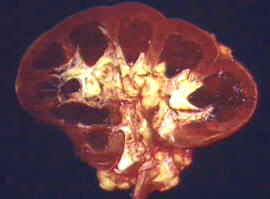 Kidney &
Liver Cancer
including cholangiocarcinoma and
cystadenocarcinoma; hepatoblastoma; mesenchymal
and renal carcinomas.
 ancers of the
liver
and kidney are relatively rare compared to others mentioned herein.
Found more often in men than women, risk of liver cancer greatly
increases when a subject has had hepatitis B or C, or cirrhosis.
Kidney cancer is a little more common, and later stage symptoms
are quite specific: blood in the urine; a lump or mass in the
kidney areas. A qualified urologist provides the best source
of diagnosis.In accordance with
prevailing "food and drug" law in some of the countries
in which we conduct business, most notably the U.S. and U.K.,
we wish to make clear that the "nutritional support"
products we design and recommend are NOT offered as
a treatment or cure for this, or any other cancer type.
(Read disclaimer: right column.)
Our testimonial cancer pages
are republished only as a guide to what others have
experienced in the course of using our products.
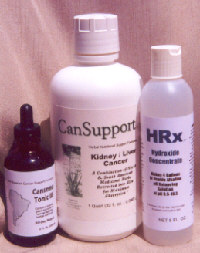 The product
list historically shown on this page for liver
and kidney cancers is as follows:
(1) Cansema Tonic III,
(2) CanSupport - Kidney / Liver, and
(3) HRx Concentrate.
Note: This information is provided for educational purposes only and is not intended to replace the use of a qualified health care professional. We strongly recommend the use of a physician for the diagnostic phase of any treatment. With an accurate diagnosis in hand, we believe the consumer, at that point, has a basic, unalienable right to seek out factual information on all therapeutic approaches, both orthodox and alternative, and choose those approach(es) that are right for them. Nonetheless, a "good doctor" should be considered a requisite starting point.
|
Liver Cancer: Who's at Risk?Cancer of the liver is a rare
malignancy in the United States, but in parts of Asia and Africa, it is one
of the most common malignancies. In the United States, the average age
on onset is 60 to 70 years; the disease occurs more frequently in males
than females. There is a strong association between chronic hepatitis B
infection and the development of heptaocellular carcinoma. People with
cirrhosis also have an increased risk of liver cancer. Other possible
hepatocarcinogens include aflatoxin, nitrosamines, oral estrogen compounds,
and numerous other chemicals. |
 Italiano,
Fran�ais,
Norsk