Disclaimer: This website or these products are not intended to diagnose or prescribe for medical, chiropractic or psychological conditions, nor to claim to prevent, treat, mitigate, or cure such conditions. They are not intended to recommend specific information, products, or services as treatment of disease or to provide diagnosis, care, treatment, or rehabilitation of individuals, or apply medical, mental health, or human development principles, to provide diagnosing, treating, operating, or prescribing for any human disease, pain, injury, deformity, or physical condition.

Potential benefits are recommended based upon traditional uses and may not be generally recognized as substantiated by competent and reliable scientific evidence. Any use of the techniques, education, information, herbal salves, and other products or services is based upon customer informed consent and private license. Results may vary depending upon use and commitment.

A traditional Amazonian herb

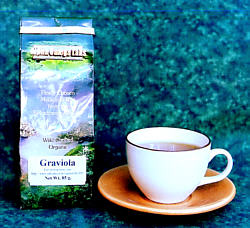
Graviola

Graviola
(Annona muricata)
Tea Leaves of
Graviola (Soursop)


Tea Leaves: 85 gr. (net wt)
Makes 4 Gallons of Tea
(Using 21 g. ≅ 9 T. to make a gallon)


120 Capsules x 500 mg.

Email

Summarized Description: Graviola (called "Guanabana" in Ecuador) has been well-publicized and has been the subject of research. We first reported on it in 2001 when the Health Sciences Institute ran an article entitled, "Billion-dollar drug company nearly squashes astonishing research on natural cancer killer." (Note: it is the position of orthodox medicine that graviola has no proven anti-cancer properties. Our position is neutral, and we merely report the ethnobotanical use of the product and the findings of independent researchers.)
In 2008 we introduced AO Oleander Graviola Blend as an adjunctive tonic with the nerium-based preparation, amvirzel. We are now introducing it as a tea, as it is one of the most pleasant tasting tonics we've ever encountered.

Leslie Taylor (RAI) has written about the plant's traditional uses. (1) A more complete list of reported activities can be found below, taken from Dr. Duke's work.


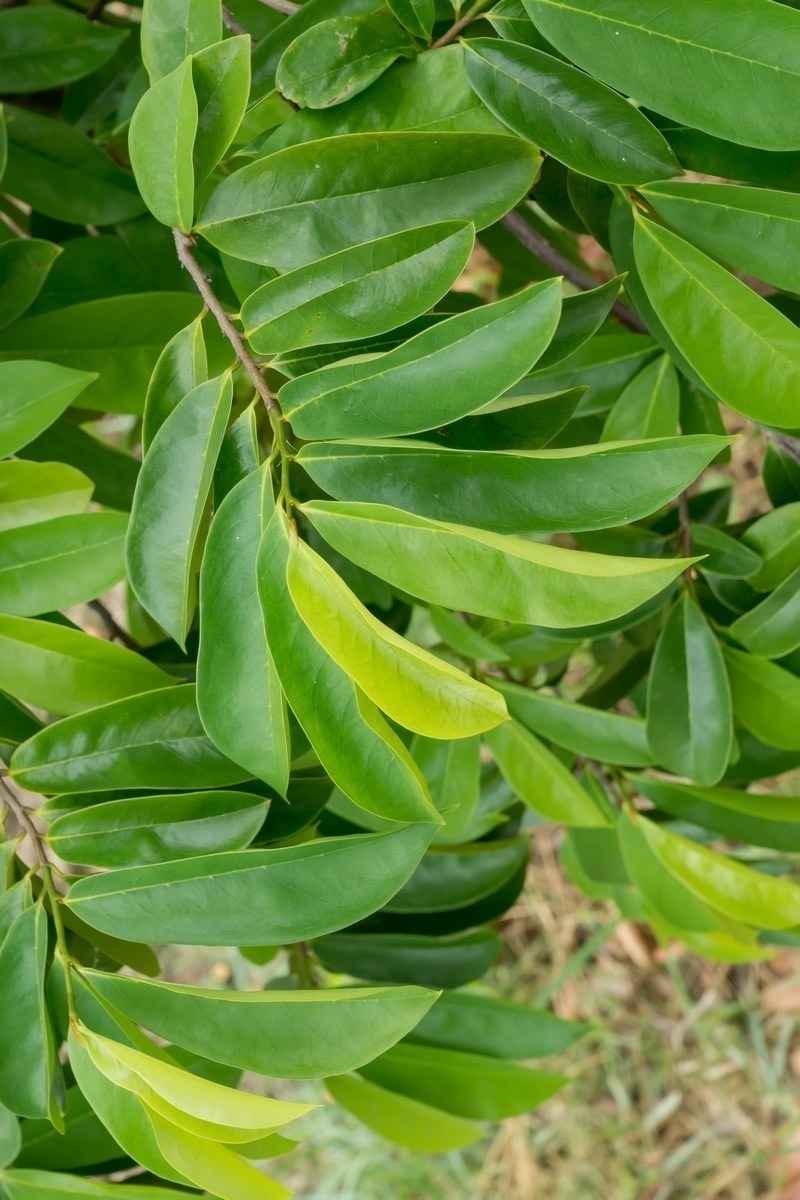
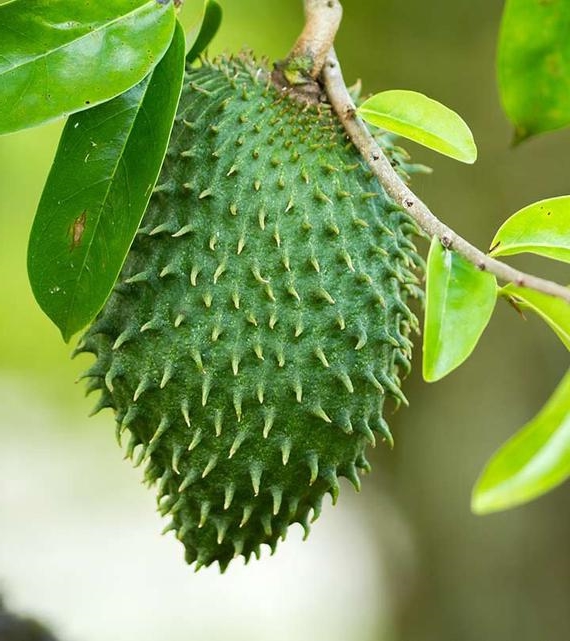
raviola, a close relative of cherimoya (Annona cherimola), is a fruit tree that grows from Mexico to Peru. Although better known for its fruit ("soursop") it is also a traditional from the Amazon, with a long history of use by the indigenous (see below).


Use & Protocol
I. Preparation --- if you can boil water, you can make this product: Professional herbalists will recognize this as a standard decoction.
  1. Add roughly 20 grams (about 1/4 of the bag of product) to one gallon (roughly 4 liters) of purified water (or "pro rate" from this). Boil for 45 minutes and then strain or filter out the remnants of the product.
  2. Drink 1/2 to one cup at least one hour before each meal.

Warnings / Contraindications
Taylor indicates that graviola has "anticardiodepressant, vasodilator, and hypotensive (lowers blood pressure) actions. Large dosages can cause nausea and vomiting. Avoid combining with ATP-enhancers like CoQ10." (2)
Duke's warnings are more succinct: "Repeated consumption could cause the neuronal dysfunction and degeneration underlying the West Indian parkinsonian syndrome (X11835443). As of July 2007, the FDA Poisonous Plant Database listed 16 titles alluding to toxicity of this species." (3)


Shelf-Life
This product is dehydrated, so its functional shelf-life is well in excess of two years.
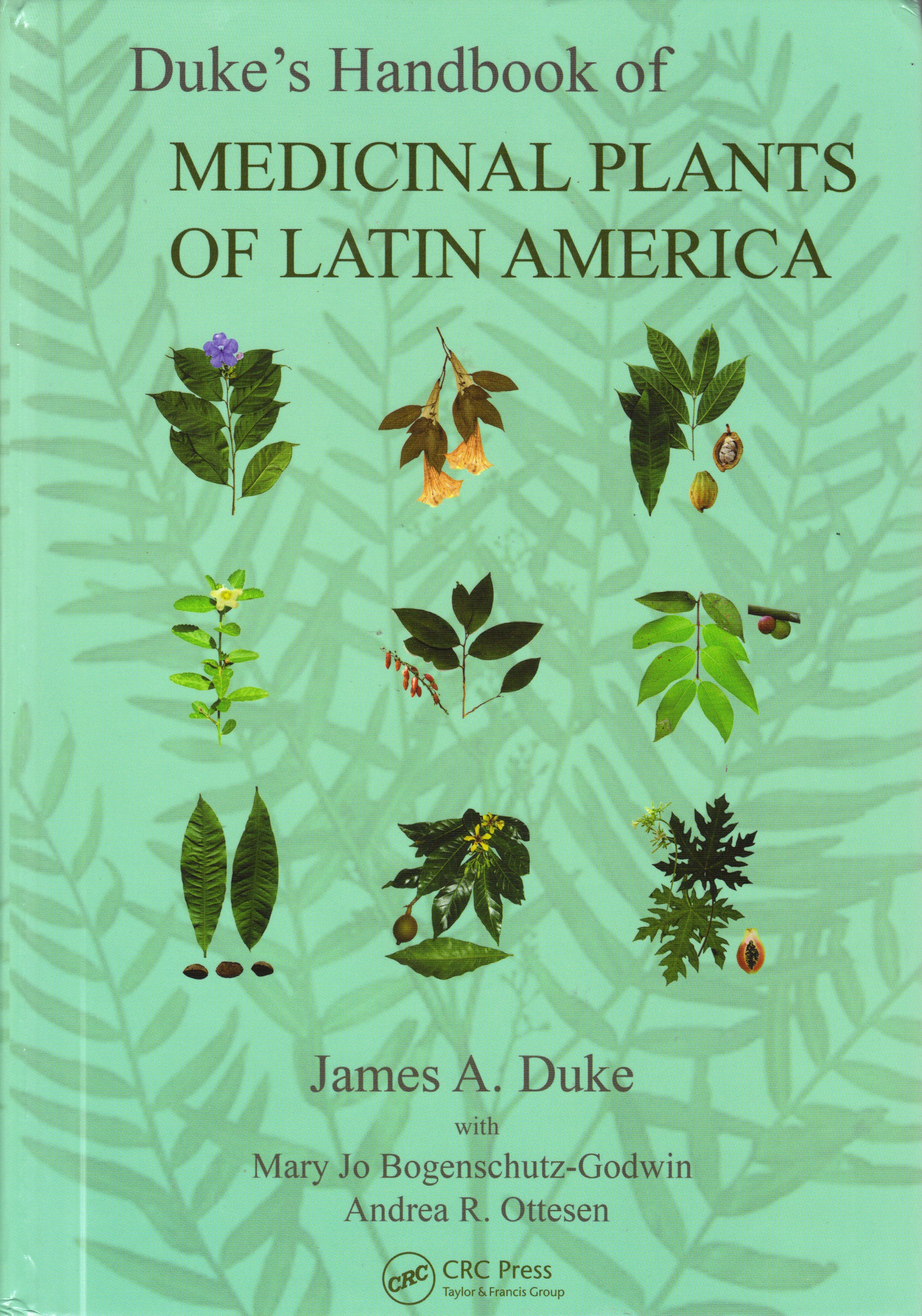
James Duke's Handbook of Medical Plants of Latin America
Medicinal Activities
Further information for practitioners: World-famous botanist Dr. James Duke attributes the following activities to this plant (p. 51-53; see hardcopy cover at right), drawn from the extant literature. (See his graduation for "level of efficacy" on our amazon traditionals page; followed by Duke's bibliographic abbreviations (in capital letters), which we identify on a separate page.)

  • Analgesic (1; DAD; JFM);
  • Anthelmintic (f; WO2);
  • Antibilious (f:DAW);
  • Antidepressant (1; X9401954);
  • AntiHIV (1; X9687085);
  • Antiinflammatory (f; WO2);
  • Antimalarial (1: WO3);
  • Antimitotic (1; WO3);
  • Antiparasitic (1; X1798795);
  • Antiplasmodial (1; WO3);
  • Antiscorbutic (f; MPG);
  • Antiseptic (1; WO3);
  • Antispasmodic (f; KAB; WO2);
  • Artemicide (1; MPG);
  • Astringent (f; DAW; KAB);
  • Cardiodepressant (1; MPG);
  • Cardiotonic (f; DAV);
  • Cicatrizant (f; DAW);
  • CNS-Depressant (f; WO2);
  • Cyanogenic (f; EB22:96);
  • Cytotoxic (1; WO3; X11473425; X11975482; X7494150);
  • Depurative (f; EB30:122);
  • Emetic (f; DAW, KAB);
  • Febrifuge (f; DAW);
  • Filaricide (1; WO3);
  • Fungicide (1; X161407);
  • Hemostat (f; WO2);
  • Hypotensive (1; EB30:122; MPG);
  • Insecticide (f; DAW);
  • Lactagogue (f; JFM);
  • Molluscicide (1; X11315753; X16401556);
  • Parasiticide (f1; KAB; MPG; WO2);
  • Pectoral (f; DAW);
  • Pediculicide (f; DAW);
  • Piscicide (f; DAW);
  • Plasmodicide (1; MPG; WO3);
  • Sedative (f; DAV; EB22:96; RAR);
  • Soporific (f; DAW);
  • Spasmogenic (1; MPG);
  • Stomachic (f; DAW);
  • Suppurative (f; KAB);
  • Tranquilizer (f; EB22:96)
  • Trichomonacide (1; MPG);
  • Uterotonic (f; MPG);
  • Vermifuge (f; DAW).


Indications
Further information for practitioners: Duke provides the following indications for this plant:
  • Aphtha (f; KAB; WO2);
  • Arthrosis (f; MPG);
  • Asthma (f; JFM; MPG);
  • Atony (f; NAD);
  • Bacillus (1; WO3);
  • Biliousness (f; DAW);
  • Bleeding (f; WO2);
  • Boils (f; DAW);
  • Catarrh (f; WO2);
  • Childbirth (f; DAW; MPG);
  • Cholecystosis (f; EB22:96);
  • Colds (f; JFM);
  • Coughs (f; DAW; KAB);
  • Cramps (f; DAD; KAB);
  • Depression (1; X9401954);
  • Dermatosis (f; DAW; MPG);
  • Diabetes (f; DAV);
  • Diarrhea (f; DAW);
  • Dysentery (f; DAW; KAB);
  • Dyslactea (f; JFM);
  • Dyspepsia (f; DAW);
  • Dysuria (f; JFM; MPG);
  • Enterosis (f; MPG; NAD);
  • Fever (f; DAW; KAB);
  • Filaria (1; WO3);
  • Flu (f; DAW);
  • Fungus (1; X161407);
  • Gastrosis (f; DAW);
  • Hepatosis (f; JFM);
  • High Blood Pressures (f1; DAW; EB30:122; MPG);
  • HIV (1; X9687085);
  • Infection (f1; DAW; WO3; X9687085);
  • Inflammation (f; WO2);
  • Insomnia (f; DAV: DAW; EB22:96; RAR);
  • Jaundice (f; JFM);
  • Leprosy (f; MPG);
  • Malaria (1; MPG; WO3);
  • Mycosis (f; DAW; MPG);
  • Nephrosis (f; DAW; MPG);
  • Nervousness (f; DAW);
  • Pain (f; DAD; JFM; MPG);
  • Palpitations (f; DAW);
  • Pediculosis (f; DAW);
  • Pellagra (f; DAW);
  • Ptomaine (f; NAD);
  • Rheumatism (f; IHB);
  • Rickets (f; DAV);
  • Ringworm (f; EB30:122);
  • Schistosomiasis (1; X11315753); X16401556);
  • Scurvy (f; EB25:436);
  • Sores (f; DAW);
  • Spasms (f; KAB; DAW; WO2);
  • Staphylococcus (1; WO3);
  • Stones (f; JFM);
  • Syncope (f; DAW);
  • Trichomonas (1; MPG);
  • Ulcers (f; DAW; MPG);
  • Urethrosis (f; MPG);
  • Vaginosis (1; MPG);
  • Worms (f; DAW; WO2);
  • Wounds (f; WO2).

Footnotes

  1. Taylor, Leslie, The Healing Power of Rainforest Herbs, Square One Publishers, 2005, p. 130
  2. Ibid., p. 131.
  3. Duke, James A., Medicinal Plants of Latin America, CRC Press, 2009, p. 53.
  4. Ibid.


To U.S. Users: This product have not been evaluated by the U.S. Food & Drug Administration. It is not intended to diagnose, treat, cure, or prevent any disease.

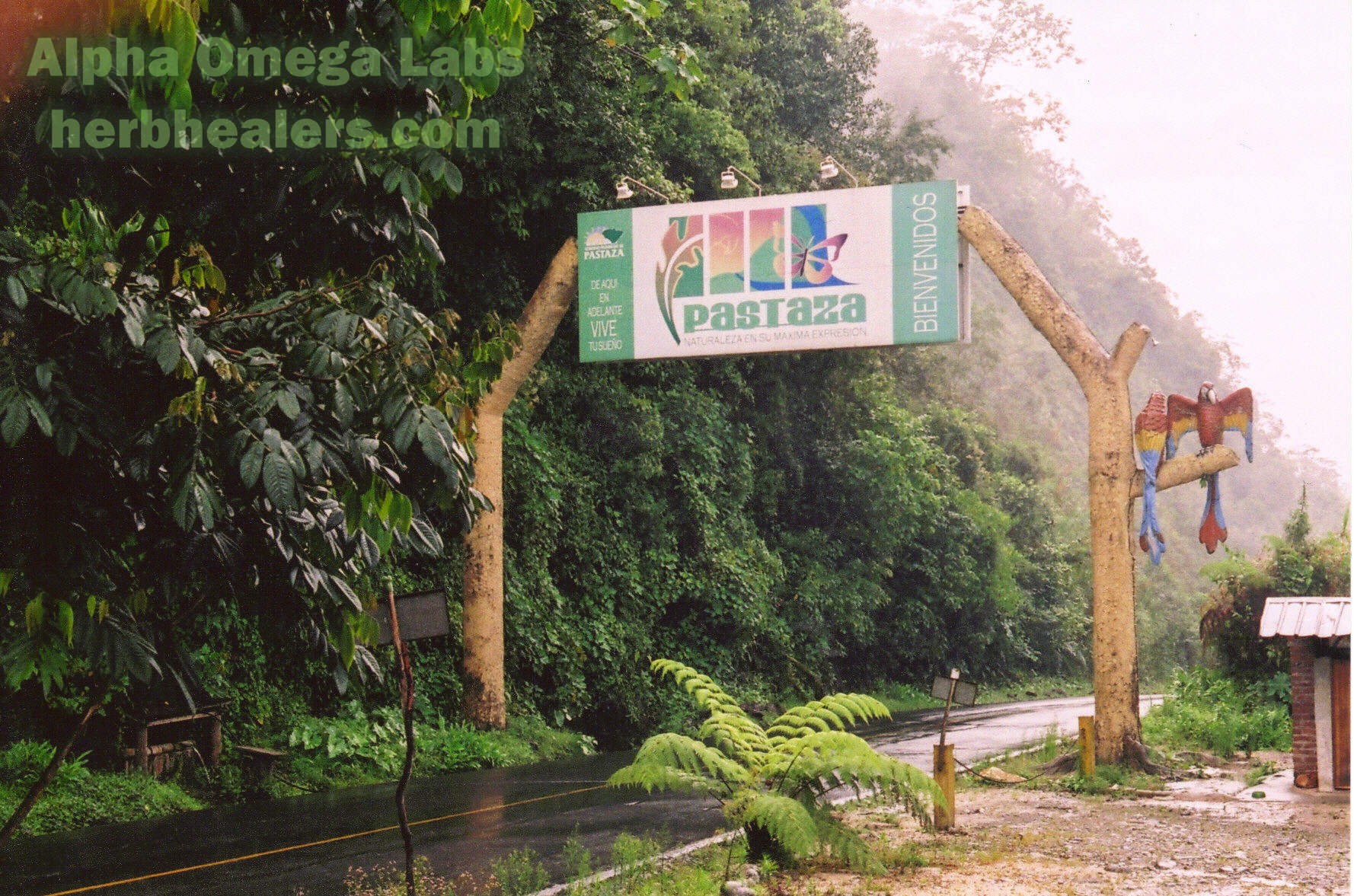
Bienvenidos a Pastaza
Sourcing From
The Amazon

All the materials used to make our Graviola are wild-crafted and harvested from the provinces of Pastaza and Moreno Santiago, near the Peruvian border. There are no cultivated varieties. Click photo to enlarge.

Dosages &
Ethnobotanical
Usage
Duke provides a "food pharmacy potential" score for this plant of, "FNFF=!!!" ("Important enough in the world to be in many U.S. supermarkets"). Fruit pulp widely consumed as food, including in U.S. markets; consumed fresh or as beverages, custards, ice cream, liqueurs, sherberts, used in Cuba's "champola de guan�bana" and Philippines "nata dy guayabana"; young shoots eaten steamed with rice (FAC; TAN). Powdered green fruit used for aphthae (stomatitis) and dysentery (KAB). Leaf tea anthelmintic, antidysenteric, febrifuge, stomachic, and sudorific, given with sugar for nervousness or palpitations (WO2). Sudorific leaves and flowers for kidney troubles (WO2). Seeds crushed and used to kill lice (DAV).
Here are other ethnobotanical uses cited by Duke (4):
  • Flowers or flower buds used for cough in R�union (KAB).
  • Roots considered antispasmodicin R�union (KAB).
  • Trinidadans use for high blood pressure (X17040567).