Disclaimer: This website or these products are not intended to diagnose or prescribe for medical, chiropractic or psychological conditions, nor to claim to prevent, treat, mitigate, or cure such conditions. They are not intended to recommend specific information, products, or services as treatment of disease or to provide diagnosis, care, treatment, or rehabilitation of individuals, or apply medical, mental health, or human development principles, to provide diagnosing, treating, operating, or prescribing for any human disease, pain, injury, deformity, or physical condition.

Potential benefits are recommended based upon traditional uses and may not be generally recognized as substantiated by competent and reliable scientific evidence. Any use of the techniques, education, information, herbal salves, and other products or services is based upon customer informed consent and private license. Results may vary depending upon use and commitment.

Note: "H3O" is now sold in the U.S., U.K., Canada, Australia, and New Zealand as "Calcium Sulfate Hydronium Concentrate."


Our first H3O bottle
pH Chart & Usage Guidelines
Since our introduction of H3O in 2002, we've received hundreds of letters of feedback on a wide variety of applications for this product. It was evident early on that "H3O" was "pH driven" -- specifically, that the product manifested different properties based on the degree of dilution with water to which it was subjected.
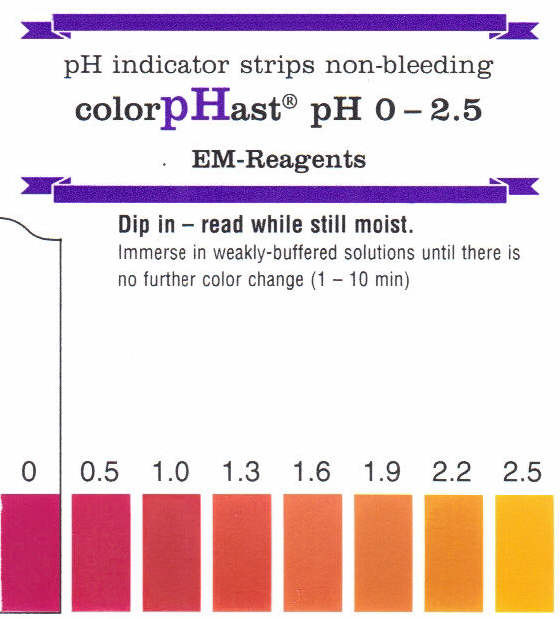
Below, we have created a "pH Chart" that correlates dilution and pH with functionality. We believe it will be useful to you as you use the product. The water (H2O) used is distilled water (≈ 6.5 pH), more alkaline than the "purified" water that was originally used to test H3O in our initial presentations of this product. If you use distilled water, you therefore get a lower yield than if you use most "purified water." Still, we recommend that you use distilled water to get the best results.

Dilution pH Yield From
8 Fl. Oz.
Functionality Related
To This pH
None. This is use of the product straight from the bottle, with no dilution.
≈ 0.0-0.1
8 fl. oz. Only in rare instances do you use the concentrate without dilution. Not intended for any internal use. (See 1:128 dilution ratio below.)
1 : 9
One part H3O to nine parts distilled H2O.
(Ex: 1 fl. oz. H3O, 9 fl. oz. H2O.)

≈ 1.5
80 Fl. Oz.
= 0.625 Gal.
(2.36 liters)
This is about as high a concentration as most people use. This would be used to kill pathogenic bacteria and other organisms; in small quantities, in a mouthwash to heal an oral infection; or as a soak to address toenail fungus. Not a commonly used ratio. Use 1:16 for a "high kill" solution.
1 : 16
One part H3O to sixteen parts distilled H2O.
(Ex: 1 fl. oz. H3O, 16 fl. oz. H2O.)

≈ 1.75
136 Fl. Oz.
= 1.0625 Gal.
(4.02 liters)
Same effects as 1:9 above, except that the anti-microbial action would take slightly longer.
1 : 24
One part H3O to 24 parts distilled H2O.
(Ex: 1 fl. oz. H3O, 24 fl. oz. H2O.)

≈ 1.8
200 Fl. Oz.
= 1.5625 Gal.
(5.913 liters)
Same effects as 1:16 above, but responding not as quickly.
1 : 32
One part H3O to thirty-two parts distilled H2O.
(Ex: 1 fl. oz. H3O, 32 fl. oz. H2O.)

≈ 1.9
264 Fl. Oz.
= 2.0625 Gal.
(7.805 liters)
Same effects as 1:24 above, except that the anti-microbial action would take slightly longer. This was our original recommendation for general anti-microbial usage.
1 : 64
One part H3O to sixty-four parts distilled H2O.
(Ex: 1 fl. oz. H3O, 64 fl. oz. [half gallon] H2O.)

≈ 2.1
520 Fl. Oz.
= 4.0625 Gal.
(15.374 liters)
For use as a general mouthwash; light anti-microbial wash.
1 : 128
One part H3O to 128 parts distilled H2O.
(Ex: 1 fl. oz. H3O, 128 fl. oz. [one gallon] H2O.)

≈ 2.35
1,032 Fl. Oz.
= 8.0625 Gal.
(30.511 liters)
This is the dilution ratio that we recommend for drinking a "high proton" beverage. Taking one to two tablespoons a day at this dilution ratio would equate to the anti-aging benefits which Dr. Vladimir Volkov ascribes to in his writings. Note: The acid water obtained through general hydrolysis is about 2.7, so this is "beverage" would be even higher in H+ content. The taste of the end beverage at this dilution ratio is very agreeable. We recommend adding a twist of lemon to taste . . . Incidentally, the daily intake of R.L. Banks to produce the results shown in his pictures, were 5 cc, 2X daily. This was taken in gel caps. To obtain this same result at the 1:128 ratio, you would consume 1,280 ml. (that's 1.35 quarts or 5.4 cups) throughout the day.

Home | H3O Intro (2009) | Email