"The problem with being human is that we're born into this world
without a operator's manual." --- Buckminster Fuller
without a operator's manual." --- Buckminster Fuller

How the Right Lifestyle Choices, such as Right Diet, Right Exercise, and Right Environment can support your general health and wellness...
 e are frequently
asked, "What
diet should I be on?" or "What else can I do in terms of diet that
can improve my condition?"
 That people should be so
confused is not surprising. Even medical doctors give out conflicting
information as to what diet, exercise, or other lifestyle choices
their patients should make to stay on the course back to good health. To make things easier, we
commissioned the study and review of 30 of the most respected
books in the public domain on the relationship between lifestyle -
primarily diet - and health. Each volume had
to draw its conclusions from peer-reviewed scientific studies - the
bulk of which had been conducted over the last 25 years. The books
we reviewed had copyright dates running from 1980 to 2001.
We placed emphasis in our review on what the authors
describe as a "health-supporting diet."
Concensus Color Rating System
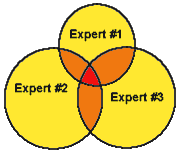 To assist in identifying
those recommendations which have the greatest weight
among our authors, we have
divided the advice of the writers into three distinct areas
in accordance with how concurrence exists in the field.
 Red advice means
that a particular conclusion comes as close to unanimous support
from nutritional / medical authorities as you will ever get. An
example would be the conclusion that smoking tobacco, as
a lifestyle choice, increases your risk for lung cancer
and
emphysema.
 Orange advice means that the evidence is strong, but
not unanimous. An example would be a reduction in total
caloric fat intake for cancer patients, or advice that
a diet low in animal proteins (which acidify the body)
is health-supporting - giving rise to advice which
favors vegetarianism.
 Yellow advice
means that the evidence is credible and worthy of note, but tends
to be the domain of one, perhaps two, experts in the field,
but is not highly regarded by most authorities.
An example would be the use of pancreatic enzyme in the
treatment of
diabetes mellitus. This rating system is
provided only to offer comparisons to where concensus lies.
It is not a rating
system that necessarily parallels our own views: for instance,
the use of Cansema Salve
would only garner a yellow rating;
while the use of radiation therapy as a viable approach
to eliminating cancer would easily secure an orange to
red rating. Obviously, this rating system isn't designed
to concur with our own collective opinion. Ratings can also change over time. The entire
notion that your diet influences your chances of getting
cancer is red today; but was yellow to orange sixty years ago.
Indeed, it was largely regarded as medical heresy.Because of these
disparities, we weigh in with the collective opinion of our
own staff when our judgement differs from the verdict of
the concensus color rating system. We do not always disagree,
but when we do, we insert this variance in the text and
clearly indicate that it is our own collective opinion
and why.
How to Proceed
In the right column, you will find that
we break down our "Health Zone" documents into two sections:
(1) 28 Things You Can Do ..., and (2) Book Reviews, which
provide depth into our source documentation.We suggest you
read "28 Things" first. It is concise and contains the most
critical things you could be doing NOW to improve
your health. Then read through our book reviews
and short advice summaries on the books used to compose
the above summaries.
The "Health
Zone" Documents
Zone" Documents
 The Top 28 Things You Can Do:
General Wellness Information.Good health
begins with the kitchen ... continues with
a sensible exercise plan ... and only then ends with supplements. You work
against your own efforts - whether you are using Alpha Omega's
products, or someone else's - if your diet isn't health-supporting.
 BOOK REVIEWS: Cancer, Heart Disease & Diet."Top 28 Things" was put
together after reviewing dozens of books and hundreds of articles
and studies. Here, we've taken thirty (30) published books
and provided you with our own critical book review, along
with the "do's" and
"don't's" that represent the distilled advice of the book --
or what you might think as the DNA of the author's message.
You don't have to spend months in the library reading the
latest dietary advice. We break it all down for you, plus
supply links to amazon.com if you still want to buy
the book.