|
Blood purification for cancer,
diabetic and heart disease patients 
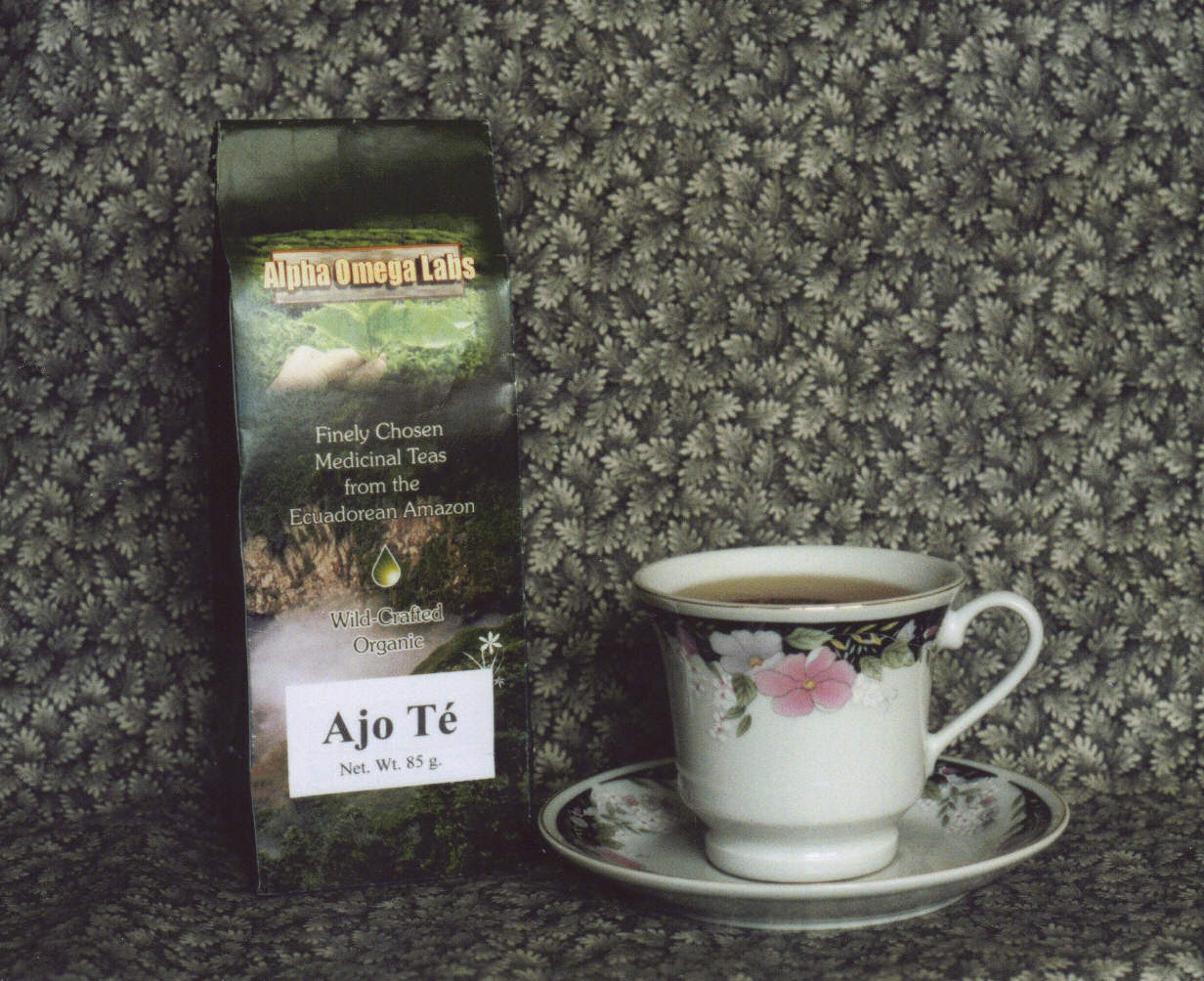
Ajo T�
(Mansoa alliacea [Past.]) Leaves of the Ajo Vine -- pronounced "AH'-Ho teh" Code 316 -- Price: $9.95 Ground tea leaves: 85 gr. (net wt) Makes 4 Gallons of Tea (Using 21 g./ 6.5 T. to make a gallon) Code 316C -- Price: $18.95 120 Capsules x 500 mg. Order Now  Email
Email Summarized Description:
Ajo T� is one of our
Amazonian traditionals.
The leaves come from a vine, common to the Amazon jungle.
It gets its name from the smell of the leaves ("ajo" means
"garlic" in Spanish -- and although the taste of the tea is
mild, not unlike drinking "green tea," the scent is close
to that of garlic). Summarized Description:
Ajo T� is one of our
Amazonian traditionals.
The leaves come from a vine, common to the Amazon jungle.
It gets its name from the smell of the leaves ("ajo" means
"garlic" in Spanish -- and although the taste of the tea is
mild, not unlike drinking "green tea," the scent is close
to that of garlic).
 Preparation is easy and the benefits can realized
with a matter of days. This vine is as close to anything
we have seen in the Amazon which the shamans and curend�ros
claim to be a panacea: specifically, they claim that it helps
purify the blood -- and impurities in the blood is, in their
widely held view -- the source of most "affluence-based"
degenerative diseases, including cancer, heart disease,
stroke and diabetes. We make no similar claims concerning
this product, but simply offer it up as an Amazonian health
beverage. Customers who have been with us over the last
20 years will readily recognize that this is the first time
we have offered a product in dried leaf form, which must
then be prepared as a "low-boil"
decoction,
as with many teas. By selling this product in tea leaf form, our customers
save a lot of money -- in product and shipping, since the finished beverage is over 95% water.
See below for details. Preparation is easy and the benefits can realized
with a matter of days. This vine is as close to anything
we have seen in the Amazon which the shamans and curend�ros
claim to be a panacea: specifically, they claim that it helps
purify the blood -- and impurities in the blood is, in their
widely held view -- the source of most "affluence-based"
degenerative diseases, including cancer, heart disease,
stroke and diabetes. We make no similar claims concerning
this product, but simply offer it up as an Amazonian health
beverage. Customers who have been with us over the last
20 years will readily recognize that this is the first time
we have offered a product in dried leaf form, which must
then be prepared as a "low-boil"
decoction,
as with many teas. By selling this product in tea leaf form, our customers
save a lot of money -- in product and shipping, since the finished beverage is over 95% water.
See below for details.
 jo T�
is powerful traditional from the Amazon,
used as a general blood purifier, preventative for colds and flus, and
in larger, more regular quantities, as an adjunctive in the treatment
of a wide variety of degenerative diseases: jo T�
is powerful traditional from the Amazon,
used as a general blood purifier, preventative for colds and flus, and
in larger, more regular quantities, as an adjunctive in the treatment
of a wide variety of degenerative diseases:
Uses & Protocols
The following uses and protocols
are well-established among the people's of the Ecuadorean oriente.
As is the case with other Amazonian traditionals,
please note that these are indigenous uses, few of which have gone through rigorous clinical
testing. This ethnobotanical information is provided as a guideline to how others use this product.
Since this product comes as dried tea leaves, proper preparation is discussed herein
before getting into protocol.I. Preparation --- if you can boil water, you
can make this product: Professional herbalists will
recognize this as a standard decoction.
II. Protocols.This product carries an unusual protocol
and is geared to treating serious diseases in the Amazon. In the Amazon,
the tea is prepared a pot at a time and drunk throughout the day.
Herbalists in the Amazon routinely ask patients to drink as much
as two liters per day -- or as much as they are able, to effect
the maximum benefit. However, in our experience, just 1/2 to one
cup, 3X a day, is sufficient for Western consumers.During the treatment period, users drink the tea in place of
water, tea, coffee and other beverages.
Note: Users should note that a slight smell of garlic will
begin to be detectable from the skin after a week of use, not as
intense as with the regular and/or high consumption of raw garlic,
but still detectable. Our protocols normally provide an amount
of product to consume, along with a regularity (normally 1X, 2X,
or 3X per day -- before, during, or after meals), but with this
product, no such advice is provided. Instead, the goal should be
to consume the product liberally throughout the day.
Again -- this mimics how the
product is successfully used in the Amazon.The product should be
consumed for a minumum of two months -- however, three months
of treatment is adviseable.Directions for use of capsules:
Take one to two capsules, twice a day. If nausea is experienced, take with
a small meal. If the detoxifying effects of Ajo still cause nausea,
reduce dosage. If nausea or discomfort is still experiencd, discontinue
use and contact us at support@herbhealers.com. Keep in mind that Ajo
is a potent detoxifier.Contraindications
Similiar to other Amazonian
traditionals, the contraindications for this product are
primarily dietary: during treatment period, do not consume pork, cow's meat,
chicken, or sea fish. Freshwater fish is alright. Additionally, no salt,
no sugar or other monosaccharide sweeteners, no spicy foods, no cayenne or aj� (hot
sauce).Shelf-Life
This product is dehydrated, so its
functional shelf-life is in excess of two years.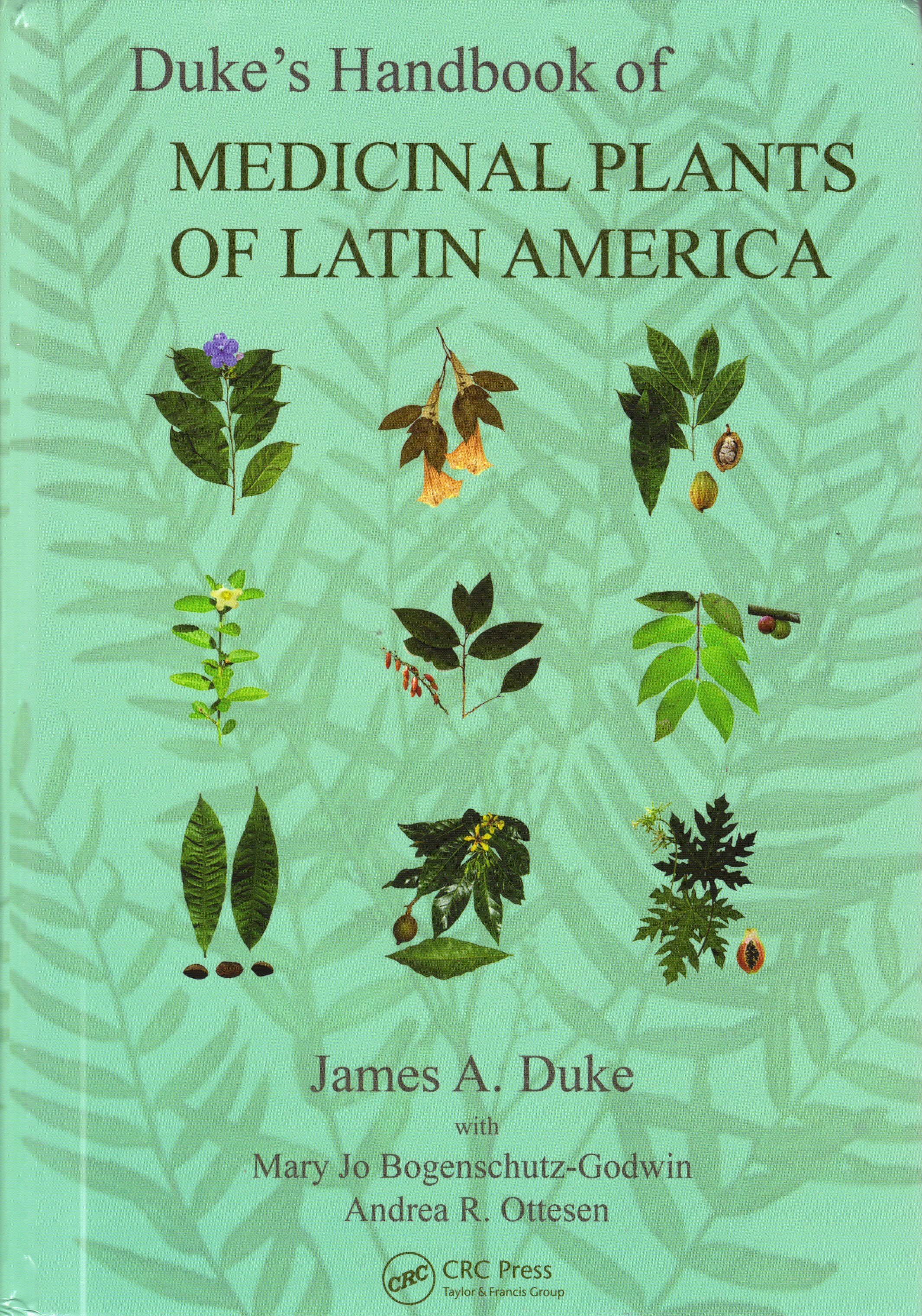
Medicinal Activities
Further information for practitioners:
World-famous botanist Dr. James Duke attributes the following activities
to this plant (p. 435-437; see hardcopy cover at right),
drawn from the extant literature. (See his graduation for "level of
efficacy" on our amazon traditionals page;
followed by Duke's bibliographic abbreviations (in capital letters),
which we identify
on a separate page.)
Indications
Further information for practitioners:
Duke provides the following indications for this plant:
|
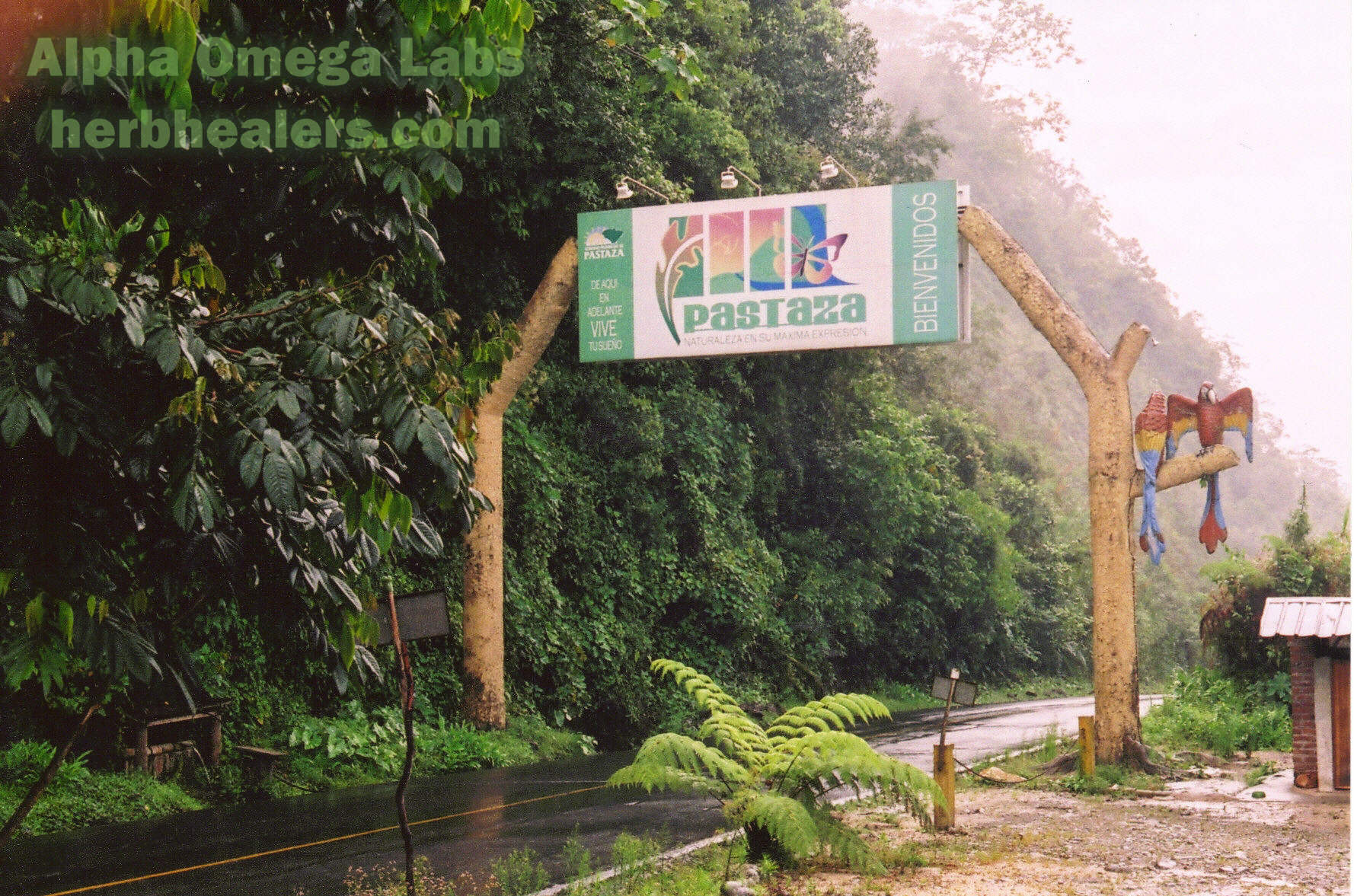
Sourcing From The Amazon All the materials used to
make our Ajo T� are wild-crafted and harvested
from deep in the the provinces of Pastaza and Moreno Santiago, near the
Peruvian border. There are no cultivated varieties.
Click photo to enlarge.
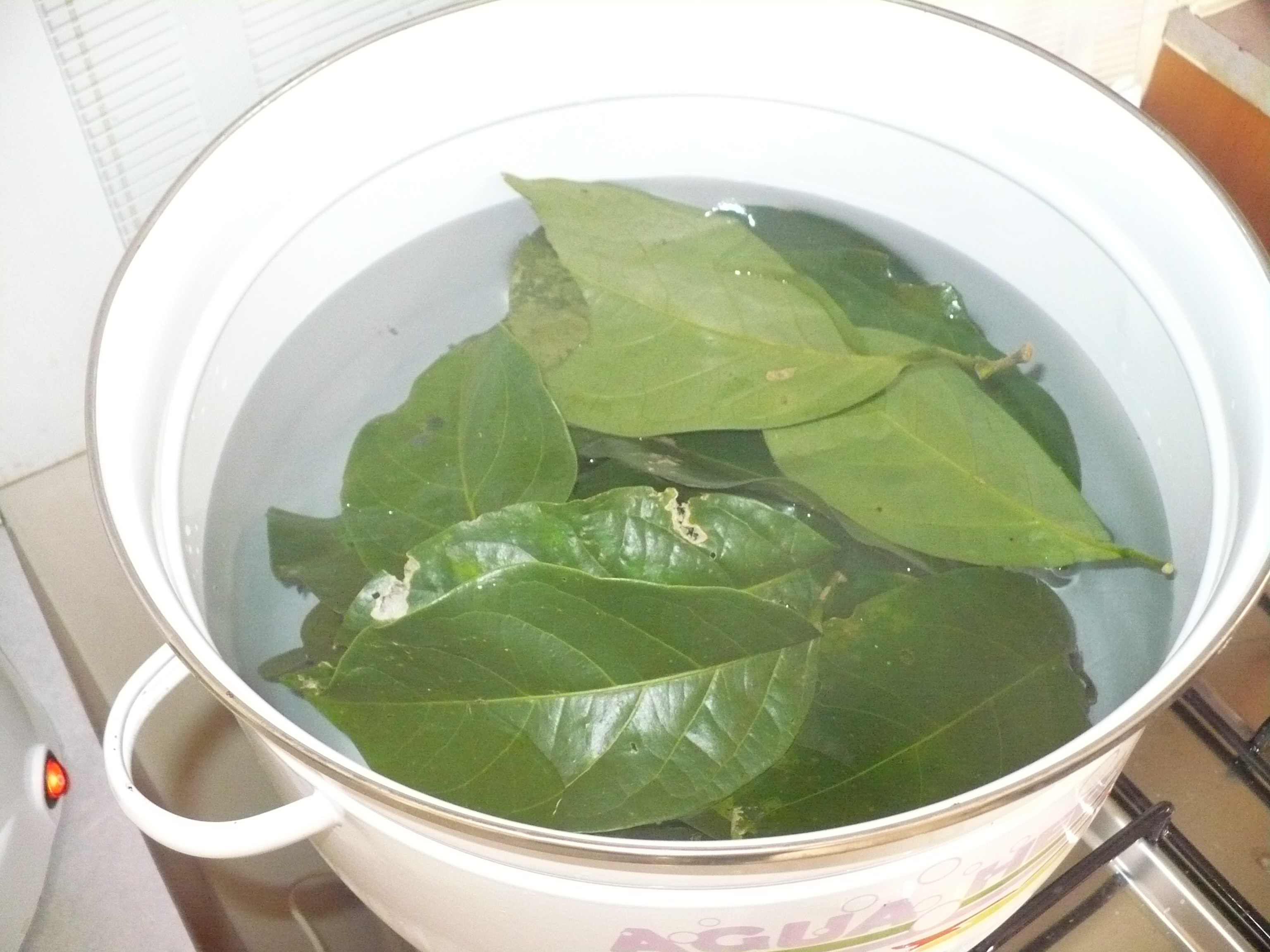 "Garlic water" -- or
tea made by a decoction of whole "ajo leaves" -- is made
quite simply in Ecuador. Twelve whole leaves are put in a
pot with one gallon of water. Upon reaching a low level
boil, the leaves continue to boil for 25 minutes, before
being cooled. There is not a single degenerative disease
that does not benefit from the use of Ajo T� -- or so
preaches untold numbers of herbalists, curenderos, and
shamans in the Amazon. Most claim it to be one of their
most important medicinal herbals.
Click photo to enlarge.
"Garlic water" -- or
tea made by a decoction of whole "ajo leaves" -- is made
quite simply in Ecuador. Twelve whole leaves are put in a
pot with one gallon of water. Upon reaching a low level
boil, the leaves continue to boil for 25 minutes, before
being cooled. There is not a single degenerative disease
that does not benefit from the use of Ajo T� -- or so
preaches untold numbers of herbalists, curenderos, and
shamans in the Amazon. Most claim it to be one of their
most important medicinal herbals.
Click photo to enlarge.
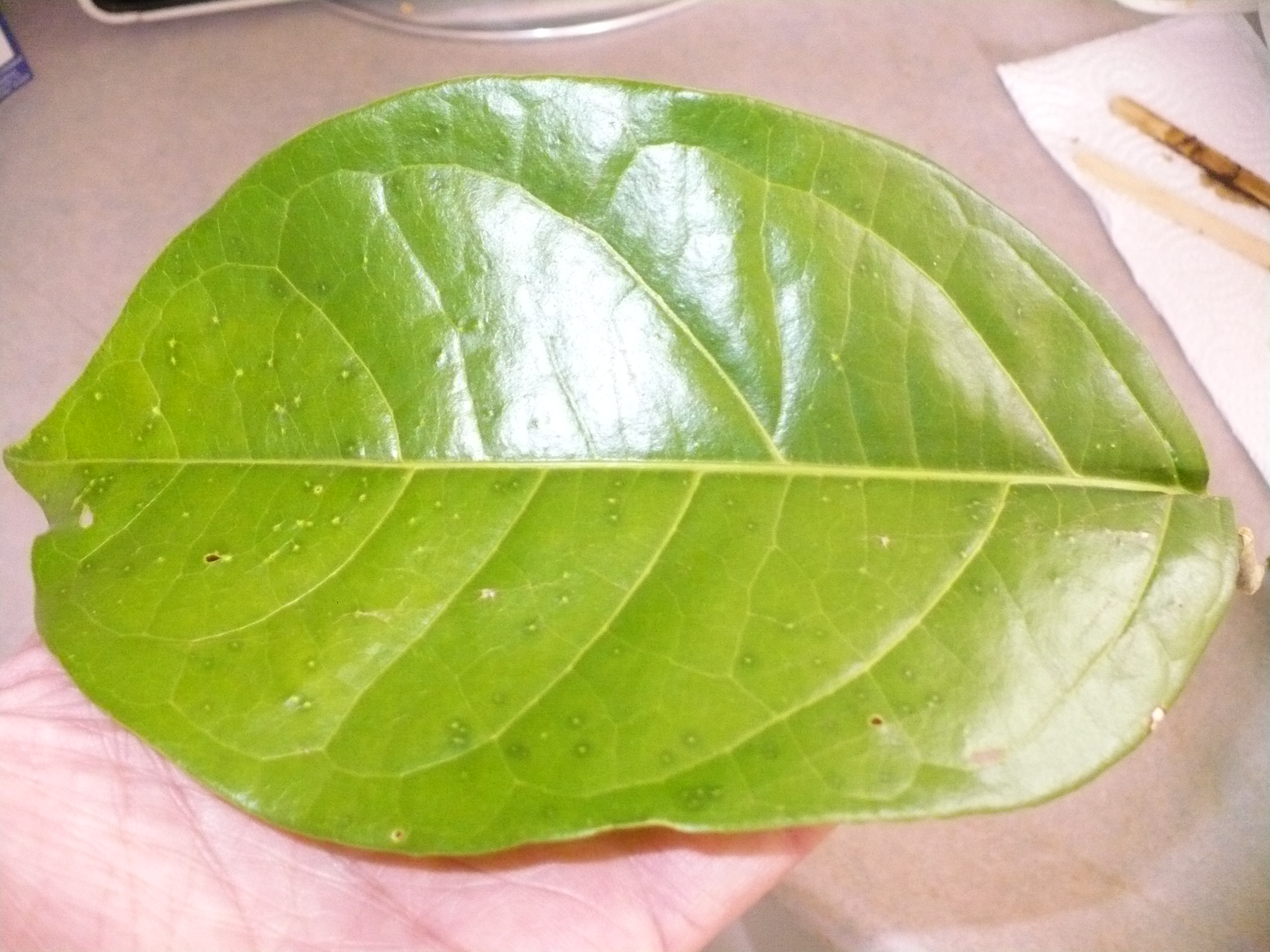 Ajo is relatively easy
to identify: the vine is relatively thin and
phyllotaxis
is alternate and whorled. If you're a practicing herbalist
and click the picture above to enlarge, you'll notice that
the leaf is oblate, non-serrated, laminate and petiolate;
venation of the single leaf is camptodromous -- with a
unique vein design.
Ajo is relatively easy
to identify: the vine is relatively thin and
phyllotaxis
is alternate and whorled. If you're a practicing herbalist
and click the picture above to enlarge, you'll notice that
the leaf is oblate, non-serrated, laminate and petiolate;
venation of the single leaf is camptodromous -- with a
unique vein design.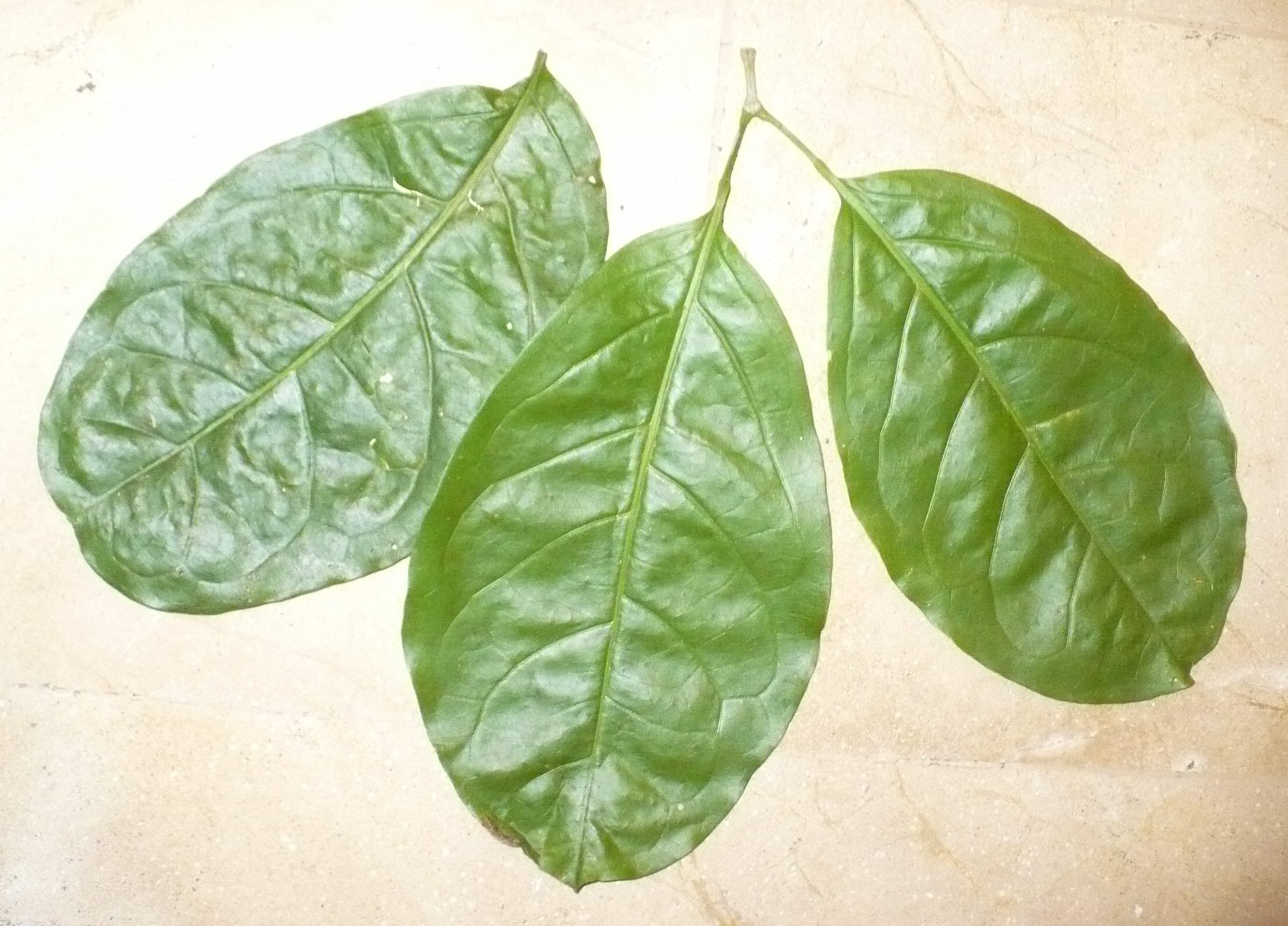 This picture shows
three dried Ajo leaves with two petrioles intact. Leaves
used to make our Ajo T� are organic and wildcrafted
(i.e. no cultivation -- they are picked from the Ecudorean
jungle), then carefully selected, dried, cut, and packaged.
This picture shows
three dried Ajo leaves with two petrioles intact. Leaves
used to make our Ajo T� are organic and wildcrafted
(i.e. no cultivation -- they are picked from the Ecudorean
jungle), then carefully selected, dried, cut, and packaged.
Dosages &
Ethnobotanical Usage Duke provides a "food farmacy
potential" score for this plant of, "FNFF=!" ("Survival food . . .
locally important; but not in U.S. supermarkets"). Although
he indicates other usage forms besides use in a tea made through
dedoction (i.e. capsules [1-2 g; 2X/day] and tincture [3-4 ml,
2X / day), this is not considered the most efficacious way to
take the herb by those who use it regularly.The leaves and stems of this
plant are in such regular usage that the only medicinal beverage
that I have seen in wider usage in the Amazon is Guayusa
(Aquifoliaceae Ilex guyausa Loes.) -- a morning
stimulant considered more healthful than coffee.
Other References
|