|
Instructions also available in:
 Spanish / Spanish /
 Russian / Russian /
 Chinese Chinese
 Vietnamese
(long version) -- (short version) Vietnamese
(long version) -- (short version)
Cansema® Instructions
For Topical (Skin Cancer) Applications
"Please read carefully before using!"
|
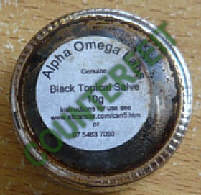
 WARNING: Please read the following instructions through carefully before applying Cansema®. Do not, in any way, deviate from the following. If you have questions after a thorough reading, please
call Alpha Omega for any clarification, or just write to support@herbhealers.com. Remember, Cansema® will provide results only if you have skin cancer, as opposed to a benign growth.
This includes basal cell and squamous cell carcinomas and
melanomas of the skin.
WARNING: Please read the following instructions through carefully before applying Cansema®. Do not, in any way, deviate from the following. If you have questions after a thorough reading, please
call Alpha Omega for any clarification, or just write to support@herbhealers.com. Remember, Cansema® will provide results only if you have skin cancer, as opposed to a benign growth.
This includes basal cell and squamous cell carcinomas and
melanomas of the skin.
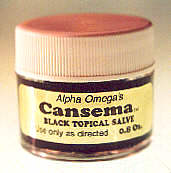
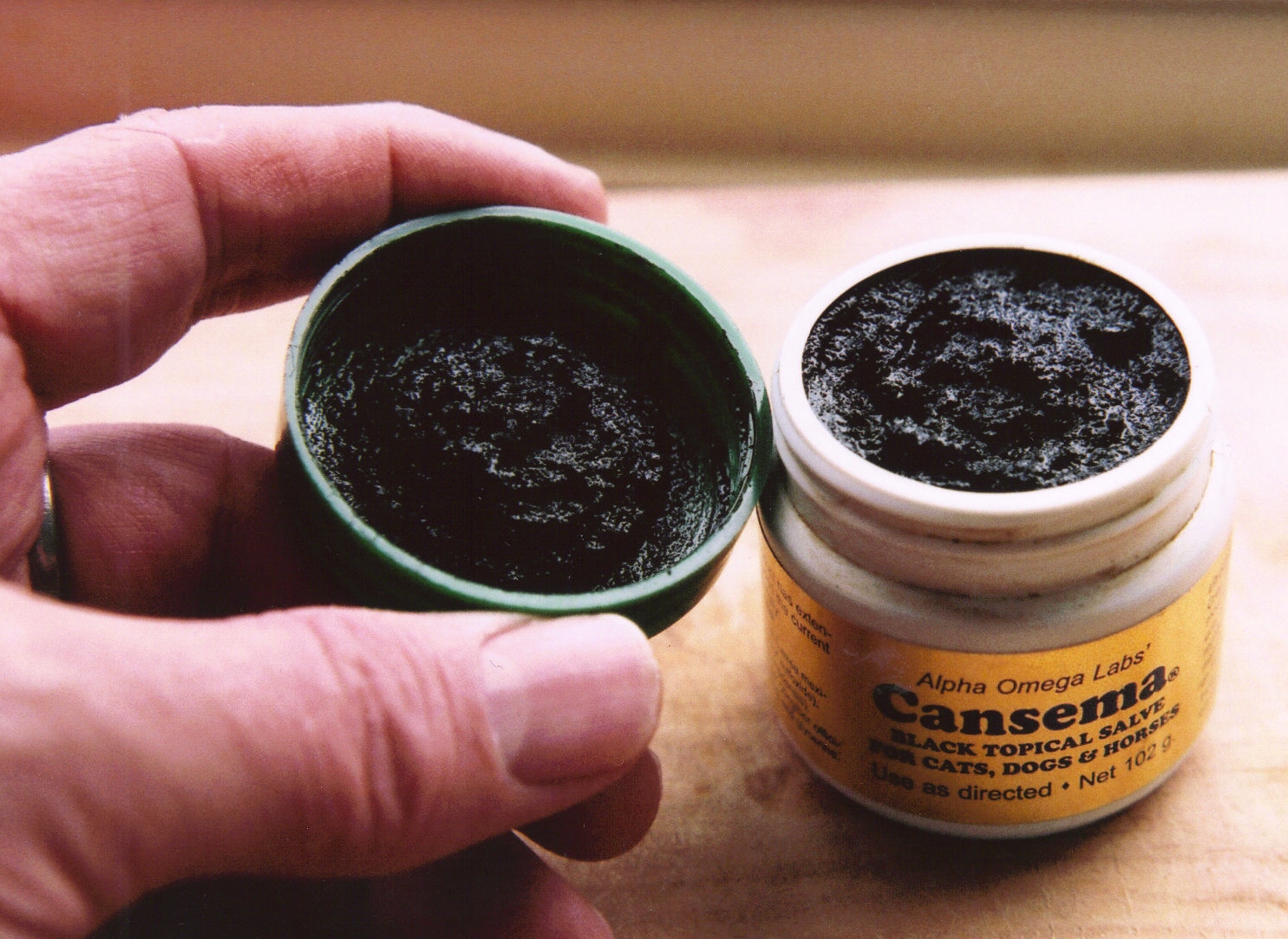
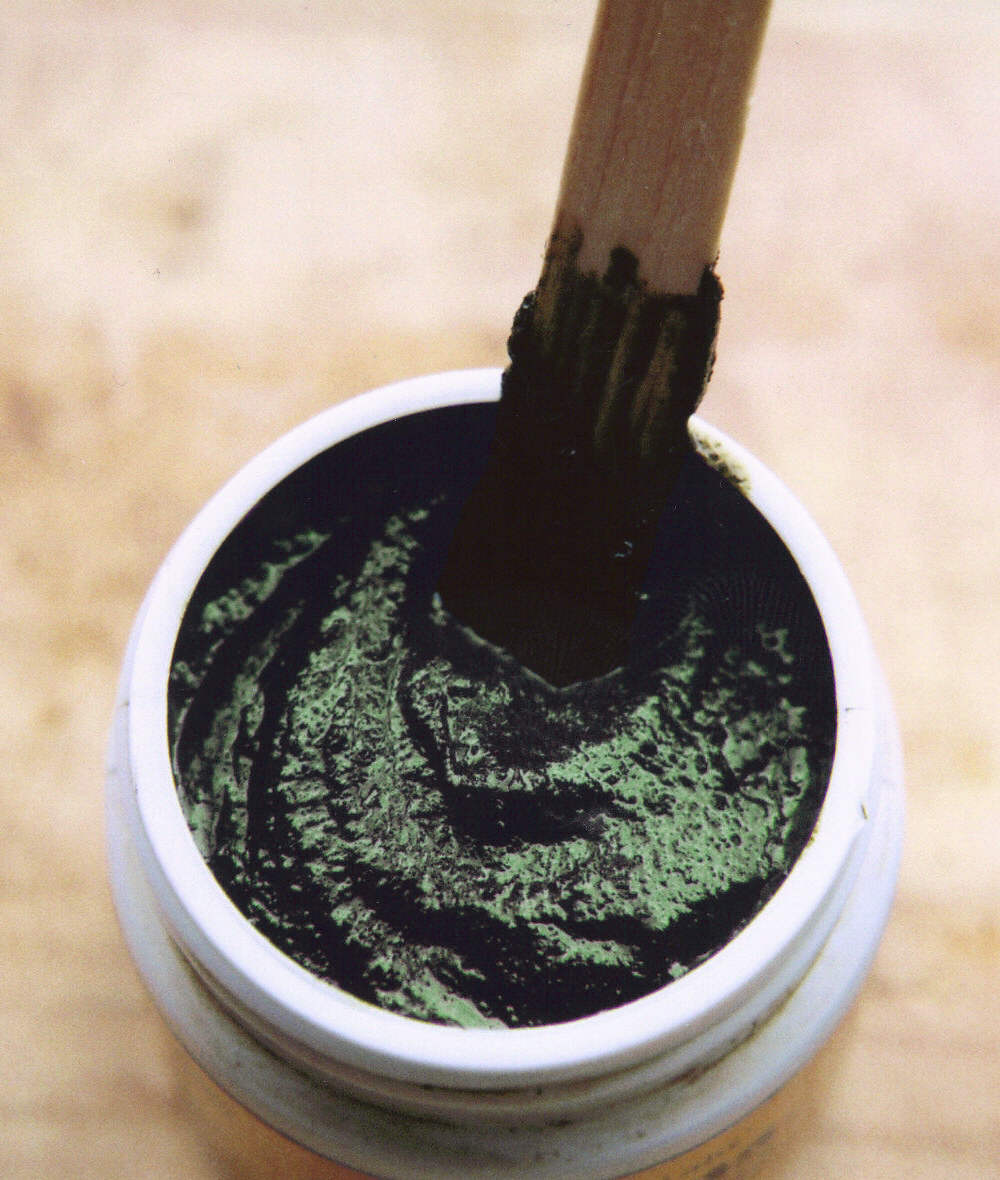
 PREPPING CANSEMA® SALVE: Few escharotic salves, if any (and Cansema® is no exception), use emulsifying agents, so to get the best results from Cansema®, you should spend a few seconds
stirring the contents before applying.
PREPPING CANSEMA® SALVE: Few escharotic salves, if any (and Cansema® is no exception), use emulsifying agents, so to get the best results from Cansema®, you should spend a few seconds
stirring the contents before applying.
 For the smaller (22 g.) container, this can be done with a toothpick; for the "clinical sized" jar, we find the best implement to be an ice
cream stick. You will find the latter's consistency yields the best results.
Note on Altering Consistency: Not everyone wants the same consistency in a salve. Some users have noted that their Cansema® is thicker than they
want it. (Thickening can also occur if Cansema is left out and allowed to dry up.) The solution to thinning the product is simple. Since Cansema® is water-soluble, just add a few drops of water to the
desired consistency, while -- again -- stirring vigorously. Doing this will not appreciably affect the strength or efficacy of the product. For the smaller (22 g.) container, this can be done with a toothpick; for the "clinical sized" jar, we find the best implement to be an ice
cream stick. You will find the latter's consistency yields the best results.
Note on Altering Consistency: Not everyone wants the same consistency in a salve. Some users have noted that their Cansema® is thicker than they
want it. (Thickening can also occur if Cansema is left out and allowed to dry up.) The solution to thinning the product is simple. Since Cansema® is water-soluble, just add a few drops of water to the
desired consistency, while -- again -- stirring vigorously. Doing this will not appreciably affect the strength or efficacy of the product.
|
--- (2) APPLICATION ---
Cansema® comes in both small 22 gram (roughly 0.8 oz.) and "clinical-sized" 102 gram (roughly 3.6 oz.) jars. The product has the consistency of a thick, moist paste. It can easily be self-applied with the fingers
and should be spread over the lesion or cancerous tissue in a thin covering, almost lightly "caked." Wash hands thoroughly before and after applying
Cansema®.
The following is observed following the application of the product when diseased tissue is detected:
- The applied area will start to tingle shortly afterwards -- anywhere between 5 minutes to 6 hours after the initial application. (In fact, if you feel "nothing" after three to six hours, it is most likely that nothing more will happen: Cansema® has failed to come into direct contact with the cancer.)
- After 24 hours, you may wish to remove the Cansema® and reapply, repeating this process up to three times, until the Cansema® can reach and "grab" the underlying aberrant growth. Know that anywhere from one to three applications are normally required initially to escharize a skin cancer. However, if the growth is considerably larger, two or three complete escharotic cycles may be required to eradiate a malignancy in its entirety.)
- In some cases, there is a burning sensation with larger lesions. For this reason, we ask that users thoroughly read our pain management page.
- It is also a good idea to place a bandage over the area, particularly if the forming eschar is on a place on the body that might be subject to being bumped or bruised in the course of daily activity. For
practical, aesthetic, and cleanliness issues, covering the site is a good idea. We recommend lining the bandage or gauze with a healing salve, cream, or ointment so prevent sticking to the eschar. If
sticking occurs, wet the bandage or gauze completely and remove slowly. Again, the point here is to NOT disturb the eschar.
|
" . . . I applied Cansema® and no eschar appeared! . . . What do I do now?"
Cansema® has to come into contact with the target cancer area in order to work. It has transdermal properties (i.e. skin penetrating ability) - a characteristic
that is enhanced with the
Cansema® - Deep Tissue, as well as our
veterinary versions. However, a couple of simple tricks can also speed up the process and/or reduce the number of applications required to "reach" a skin cancer that is well
below the epidermis. Most people don't need these techniques if the skin cancer is close to the skin surface. We recommend that these "tricks of the trade" only be used if an initial application does
not produce results - which turns out to be a minority of cases.
"Deep Loufah Wash" - Many people use a
loufah sponge to rigorously wash and prepare the skin before applying Cansema® Salve. This serves to remove some of the dead
cells in the top layer of the epidermis (the
stratum corneum), so that Cansema® has less tissue through which to travel to get to the underlying
cancer.
"Needle Points" - This technique is more effective, but more invasive. It involves taking a sterilized needle and carefully making holes in the skin - about
a sixteenth to eighth inch deep, very much as an acupuncturist would - except that the needle is removed as soon as the holes are created, usually spaced about a quarter-inch apart. Following the creation
of the "skin holes," Cansema® Salve is then (re)applied. We recommend that this technique be used by practitioners and not end users. We also advise that practitioners prep the area by rubbing three
drops of
Lugol's into the freshly "pricked" skin before Cansema® is (re)applied, provided that the subject is not diabetic - a clear contraindication, in which case hydrogen peroxide
(3-6%) will act as a
suitable substitute.
|
--- (3) MANAGING THE ESCHAR ---
 The following should be observed in managing the resulting eschar:
- After 24 hours remove the bandage.
- Wash the area thoroughly with clean water and a gentle soap to remove any excess Cansema® and other organic debris (i.e. pus, serous fluid, etc.) Some salve can become part of the white plaque. Do NOT forcefully remove. Leave it alone. It will become part of the eschar.
- If a full pus formation is not evident or is incomplete, repeat step 2 and leave the new application on for an additional 24 hours before proceeding. Normally one application is sufficient for small growths (a few milliters in diameter), but several applications or entire cycles may be required for larger tumors.
- There are instances when repeated applications of Cansema® are required because of "accessibility" problems - although this can be limited using the techiques cited in the preceding section. In order to initiate the escharization process, however, and begin killing the malignancy, it is vital that Cansema® be able to penetrate and reach the targeted growth. Again, this can take multiple (three or more) applications, though one to two applications for smaller growths is more common.
- After the eschar has formed, keep it well protected. You can apply Sangre de Drago, H3O, among other topicals in treating the area. (H3O is also known as "Calcium Sulfate Hydronium Solution" in our U.S. and Canadian markets). H3O should be diluted with purified water at the 16:1 ratio to accelerate healing - but know that this is better to use once you reach the decavitation stage. (Although recent reports have been submitted where H3O was used throughout the entire process as a cleaning agent - acting to accelerate healing and minimize scaring.)
- Wash over the area daily with clean water and gentle soap. We do not recommend "soaking" the eschar. This includes swimming, sitting in a bathtub, or otherwise subjecting the site to anything more than minimal exposure to water. The reason for this is that this part of the escharotic cycle involves the drying up, contraction, and ejection of the eschar. If you're keeping the area wet, this process is only inhibited.
- In advanced cases there is considerable "drainage," that is, a steady emission of pus. In the sense that Cansema® kills the cancer cells and takes certain leukocytes (defending white blood corpuscles) with it in the process of eliminating the neoplasm, it is a suppurative agent: that is, drainage should not be viewed as abnormal. The range of possible response is very little pus and only one bandage ever required, to a regular change of bandages required in the case of advanced melanomas. Your case will be somewhere in-between.
- Time to ejection: This will vary from case to case, depending primarily on the depth and size of the target growth. This averages between ten to sixty days. Those that are closer to the sixty day mark tend to be massive growths.
--- (4) REMOVING THE ESCHAR ---
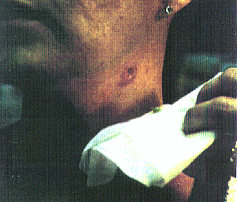 The eschar itself represents the death of the neoplasm, and this occurs shortly after application. Everything that follows from there is the body's own reparative responses. From here on out, the body
knows exactly what to do and wastes no time doing it. However, to us the days and weeks that follow may seem lengthy.
The eschar itself represents the death of the neoplasm, and this occurs shortly after application. Everything that follows from there is the body's own reparative responses. From here on out, the body
knows exactly what to do and wastes no time doing it. However, to us the days and weeks that follow may seem lengthy.
The next stage is the removal of the eschar, or scab. This usually happens, as stated previously, within 10 to 60 days after initial application. As with any scab, let it fall out when it is ready. Do
NOT pull it out prematurely, although you may find that it will eventually be attached with a small thread of connective tissue which can be easily and safely severed. If you remove the eschar premature, you
further risk developing scar tissue. Also, know that if the eschar is slow in ejecting on its own, there are
simple methods of quickening the process.
--- (5) DECAVITATION & "HEALING OVER" ---
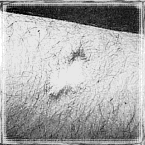 After the eschar comes out, the pit or "decavitation" can look raw and unsightly. Nonetheless, if kept covered and the everyday principles of good hygiene are followed, there will be no threat of
secondary infection. If you work in area that is less than clean, however, you might want to have H3O handy. You can apply this liberally at the 16:1 dilution ratio to the
site once a day to kill any invasive germs. Another option is the use of
Sangre de Drago -- a natural tree resin, sold by Alpha Omega Labs which also accelerates the healing process.
After the eschar comes out, the pit or "decavitation" can look raw and unsightly. Nonetheless, if kept covered and the everyday principles of good hygiene are followed, there will be no threat of
secondary infection. If you work in area that is less than clean, however, you might want to have H3O handy. You can apply this liberally at the 16:1 dilution ratio to the
site once a day to kill any invasive germs. Another option is the use of
Sangre de Drago -- a natural tree resin, sold by Alpha Omega Labs which also accelerates the healing process.
Over a period of a few months, or in some cases two years, the entire area will be healed with only some "depigmentation" or scar tissue. The result is rarely more unsightly or unaesthetic than if surgery had been chosen instead.
In most cases the cancer does not "come back" to the area applied, unless there is underlying metastasis. To be sure that the area is clear of cancer, however, many users elect to initiate a second,
or even third, application after they get to the "heal over" stage. We take a dim view to doing this indiscriminately because the risk of scarring is increased with each new re-application. However, with particularly aggressive forms of
cancer, such as melanoma, a user may want to weigh the potential advantages of re-application, particularly if the initial cancer is located somewhere on the body that is not usually aesthetically sensitive or viewed in public (i.e. on
the back, upper leg, etc.). None of this should be taken as a substitute for using some of the better cancer marker tests that are now available from qualified, licensed physicians.
In other words, once
Cansema® has finished its work, there are normally no residual cells from the original malignancy. This rule finds more exceptions the larger the original cancer growth is, the deeper it is beneath the skin, the more instances
of skin cancer the subject has experienced, and/or the more extensive a person's history of skin cancer is or has been. Remember, you may need to repeat this process if the skin cancer is sufficiently extensive such that residual cancer
cells have been left behind after you finish your first "cycle." (Although, this same admonition would exist if you had your skin cancer surgically removed.) To be on the side of caution, have your health care practitioner check the site
to see if there is any remaining cancer. There are excellent antigen marker tests that your physician can utilize to determine if you have a "clean bill of health."
Range of
Physiological Response
Physiological Response
 here are a number of parameters which vary from person to person,
depending on the type of cancer, the size, location, and the disposition
of the individual. Because certain people experience responses
that are new to them and for some may even be a bit frightening,
it is important to cover the range of possible responses:
here are a number of parameters which vary from person to person,
depending on the type of cancer, the size, location, and the disposition
of the individual. Because certain people experience responses
that are new to them and for some may even be a bit frightening,
it is important to cover the range of possible responses:
- Size of Eschar. Many people have far more cancer activity
"beneath the skin" than is visible on the surface. Because of this,
some users are surprised that what they thought was a small lesion,
in fact turns out to be larger than expected. The average lesion
is approximately twice as big as an eschar than it appears to be
from the skin surface.
- Drainage Factor. Cansema is a suppurative: it
produces an escharotic pus formation. For many people, particularly
those with small lesions, the pus is self-contained, it dries
up within a few days and comes off as a coagulated scab in a matter
of a few days. However, this is less likely if the neoplasm
is larger -- (bigger than one inch or 25 mm), or is really an
adenocarcinoma (tumor of a glandular organ, particularly breast cancer).
Tumors which are two inches or greater in diameter almost always
involve heavy weeping and require regular changes in bandages, as
many as five times a day in some cases. Know this to be a normal
part of the healing process.
- Inflammation, Redness and Edema. In nearly all cases there is at least
some inflammation and buildup in fluids in and around the applied
area. Cansema is lightly caustic, so this is a natural
physiological response. Often the edema doesn't occur at the site
of application, but in nearby joints. For instance, if Cansema
is applied to a cancerous lesion residing on the gastronemius
(larger calf muscle), it is not uncommon to see edema develop
at the ankle.
Edema is a natural part of the process and should not cause distress. It rarely lasts for more than a few days.
- Pain Factor. The range of response varies greatly, from
mild tingling to considerable. Our experience is that at its worse,
Cansema is rarely more painful than that to be endured in the
healing process that follows surgery. Users should be prepared
with pain killers ("analgesics") before application, so that if
they need it, it's available. Read our
additional comments on pain management.
- Pin Point Eshcar This is indicative of an over growth of candida on
the skin. These are small pin point eschars that form in the pores of
your skin. These can be accompanied by a superficial eschar or scab made
up of the epidermis where the fungus grows.
- Allergic Reactions. We have had reports of experiencing an acute superficial reaction to the adhesive from a Band-Aid with the Black Topical Salve and Bloodroot Pastes. This is characterized by inflammation, redness, edema and a superficial eschar comprised of the epidermis. If you have sensitive skin we recommend leaving the area uncovered or using gauze (lined with a healing salve, cream or ointment) and paper tape.